

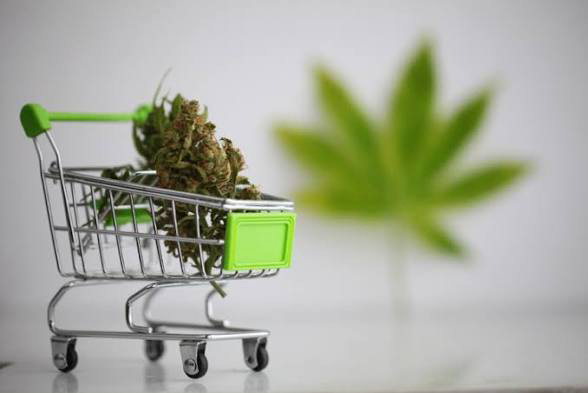
What’s Happening To Hemp?

“Policy made without open hearings can lead to unintended harm and fuel the very unregulated market lawmakers aim to prevent.”

-Justin Eve, Hemp Grower

Light the charcoal. Sprinkle the sage. Negative energy go away. Ok, so today I want to tell you about the recent nationwide banning of hemp. And this is about to heavily affect people’s lives. I can say personally that I’m very disappointed. Let me explain everything that is going on and what to keep an eye on.

With the recent government shutdown and eventual reopening, the spending bill called the Continuing Appropriations and Extension Act of 2026 had nestled in its grasp was a new law that changed the THC limit from .3% delta-9-THC to .3% total THC. This action has closed the loophole in the 2018 Farm Bill which allowed for people to find relief when medical cannabis was not available. The new restrictions specifically prohibits products containing  more than .4 mgs of total THC per container and bans the use of synthetic or artificial derived cannabinoids.

What does this mean? This means that the cap on THC will now prevent people from getting much needed relief and, once again, pushes consumers to the black market for products. Now, I was not in favor of these products because they were not regulated and gave cannabis a bad name by allowing irresponsible teens to have access to “gas station” and “headshop” products which have made people very sick. This includes CBD, THCa, delta-8, delta-9, edibles and vapes. As usual, though, instead of creating reforms to protect consumers, they have essentially made the products useless. I’m all about regulation because when it’s not regulated there are no testing safety standards that are required for medical cannabis. Therefore, there’s actually no telling what is in these products.

There are full spectrum products that contain THC and other compounds. Broad spectrum products that contain cannabinoids, which many use synthetics, but not the THC to get you high. And isolate products such as delta-8 and delta-9 which are primarily just isolated THC molecules. 

The opposition states that the products are allowed to continue getting people high. Ok, well, the loophole allowed these products to have THCa because it was not THC. The conversion happens when a heat source like a lighter or an oven is used to release the psychoactive effects of the plant. So, essentially the product was still weed that would get you high. The difference is what stage the plant is harvested.

Many people use CBD, which is a cannabinoid found in the cannabis plant, to help relief the uncomfortable effects of many conditions. So now, because of the limits, this relief would require copious amounts of those same products, which is not practical or affordable. This is set to go into effect on November 18, 2026. You might be asking yourself why so far away?

This allows for further legislation which is already in the works to keep these products on the market safely. However, now this will be a federal ban on hemp products which will supersede state governance. The hemp industry is estimated to be supported by 300,000 jobs. And the economic estimates are $28.4 billion in annual sales. The time period allows industry to adapt and to potentially establish a regulatory framework. It also allows federal agencies like the FDA to clarify specific definitions and for the states to determine how they will interpret the federal restrictions within their own cannabis laws. And  an immediate ban would have caused immediate chaos and economic disruption (www.thehill.com, 2025).

If something isn’t done,  the redefinition of hemp will recriminalize most existing intoxicating hemp products which will now impose new, very low THC limits per container. For patients not living in a medical cannabis state, hemp-derived products were their only legal access to certain cannabinoids. The ban would eliminate the alternative completely. And it would limit patient access to only FDA approved drugs with only CBD and no THC (www.statnews.com, 2025).

And what organizations are funding this bill? You got it! Major alcohol industry companies such as: American Distilled Spirits Alliance, Beer Institute, Distilled Spirits Council of the United States, Wine America, and Wine Institute, pushed towards this ban as well as other retail giants such as Coca-Cola, Nestle, General Mills, Bacardi North America, and Moet Hennessy USA (https:mjbizdaily.com, 2025). Key congressional figures include Mitch McConnell, Dick Durbin, Tammy Duckworth, Brian Mast, and Nancy Mace (https://stateline.org, 2025). Please contact your congress men and women to urge a protective framework rather than a full ban. Those whose quality of life depends on it. Thanks for reading!

Affirmations: My body is filled with healing energy whenever I use hemp products.

***Don’t forget to watch the video!***

 #Thispuzzledlife

Beware Of Deadly 7-0H Products

“It is dangerous, misleading, and illegal” and a “massive fraud on consumers that puts their safety directly at risk.”

–American Kratom Association

 Light the charcoal. Sprinkle the sage. Negative energy go away. Today, I want to talk to you about the deadly synthetic opioid products known as 7-OH (gas station heroin). You might think that these products are safe. But there is only one descriptive term for them…..DANGEROUS.

Let me break down the problems associated with these products. The product is so dangerous that the FDA  is specifically targeting the 7-OH products a concentrated byproduct of the kratom plant. They are not focused on the natural kratom leaf products. These products have a high potential for abuse because they bind to opioid receptors. They are not FDA-approved 7-OH opioid products. FDA Commissioner Marty Makary, M.D., M.P.H. is quoted saying, “7-OH is an opioid that can be more potent than morphine” (https://www.fda.gov, 2025).

What is 7-OH? –hydroymitragynine is a powerful opioid-like compound found in the leaves of the kratom plant. While this compound is naturally in trace amounts because manufacturers have begun to concentrate or synthesize it into highly potent and addictive products. They are sold at gas stations, vape shops and smoke shops. At this time, anyone of any age can purchase these products. And they are appealing to kids and teens because they are also made into edibles.

“It’s a recipe for a public health disaster.”

-Jim O’Neill, U.S. Department of

 Health and Human Services

·        Significantly stronger than morphine:Some synthetic products are reportedly 13 to 40 times more potent than morphine.

·        Intense opioid effects: these include pain relief, euphoria, and sedation.

·        High risk of dependence and addiction:Regular use can quickly lead to physical and psychological dependence with severe withdrawal symptoms when use is stopped.

·        Serious adverse effects: There have been a notable rise in emergency room visits with symptoms that include nausea, agitation, rapid heart rate, high blood pressure, seizures  and respiratory depression that can be fatal.

Difference between natural and concentrated 7-OH

·       Natural kratom: in the natural form as a plant leaf, kratom contains only a small amount of 7-OH (less than 2%). It is often used for its mild stimulant or opioid-like effects, but the risk profile is significantly different from highly concentrated products.

·       Concentrated/Synthetic 7-OH: lab created product where the 7-OH has been concentrated to a higher potency reaching 98%. These unregulated products are sold in forms like gummies, drinks, and tablets ((https://www.dshs.texas.gov, 2025).

I cannot express enough the dangerousness of these products. I, for one, fell in love with heroin and pills many years ago. And what a difficult process it has been to break free from those substances. Because “One is too many. And a thousand is never enough.” That’s how addiction works. Parents if you think that this is all a bunch of hoopla for nothing, you are dead wrong. This product scares me like most can’t. We have enough of an “opiate crisis” without introducing more into the family line. Educate yourself and your children. It just might save lives. Thanks for reading!

Affirmation: I have the ability to make a different choice.

***Don’t forget to watch the video!***

#Thispuzzledlife
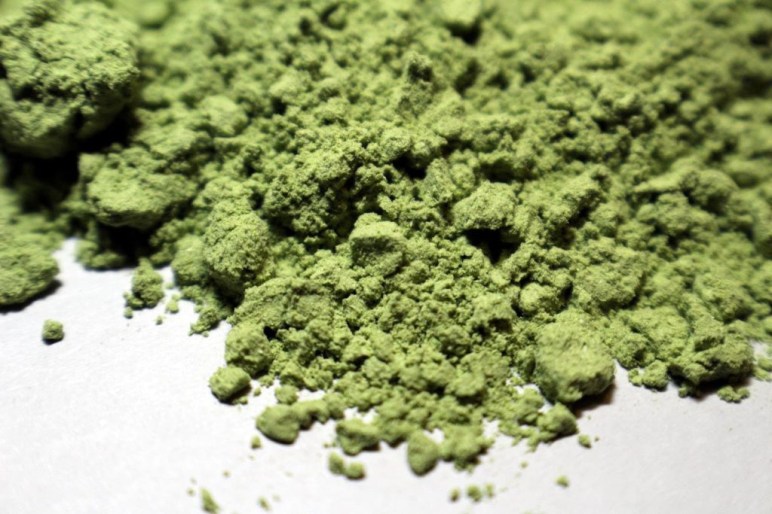
What Are The Streets Saying?Kratom

“Recovery is hard. Regret is harder.”

-Brittany Burgunder

Light the charcoal. Sprinkle the sage. Negative energy go away. Are you wondering what’s the big deal with Kratom? You may not even know what Kratom is. Today, I will tell you why there’s so many things in the news about upcoming legislation.

Kratom is pronounced (Cray-tom)Kratom is a tree native to Southeast Asia. The ground leaves, when consumed in low doses, acts as a stimulant. And in high doses function as a sedative and can lead to psychotic symptoms and both psychological and physical dependence. Kratom contains two major psychoactive ingredients mitragynine and 7-hydroxymytragynine. The leaves are powdered and can then be smoked, brewed with tea, gel capsules or mixed into a liquid. Or the leaves can be chewed. It can also lead to addiction. 

There have been several cases of psychosis and symptoms including hallucinations, delusion and confusion upon use. The effects on the body include nausea, itching, sweating, dry mouth, constipation, increased urination, tachycardia, vomiting, drowsiness and loss of appetite. Users have also experienced anorexia, weight loss, insomnia, hepatoxicity, seizure and hallucinations (getsmartaboutdrugs.gov, 2024).

I used Kratom for a while to help with chronic pain. And I have to admit that it helped. When I used it, I would mix a spoonful into some orange juice and drink it. The taste is extremely bitter. And overall, I just didn’t like the way that it made me feel. I never became addicted to this substance. I can understand why people can become addicted to it. All you have to do is look at the list of side effects to realize that those same type of signs and symptoms are related to opiate use. And some people believe that Kratom is, in fact, an opiate needing some type of legislation.

Kratom supporters argue that it is helpful for chronic pain and  opiate addicts. And I personally can’t deny those facts. And with it also being a plant, some people argue that it’s safe like cannabis. It is not. Kratom can actually lead to overdose death. Cannabis has yet to have a casualty. I don’t think that it’s completely horrible. I do think that it’s a substance that needs to be used with caution. And I also don’t believe that minors should be allowed to buy it legally. Kids just don’t use it in moderation and always look to just get high. And there have been deaths associated with its use.

There are several countries that have also banned the  possession and use of kratom. These countries include: 

§  Australia

§  Finland

§  Denmark

§  Japan

§  Isreal

§  Malaysia

§  Lithuania

§  Latvia

§  Myanmar

§  Russia

§  Poland 

§  Romania

§  South Korea

§  Singapore

§  Thailand

§  Vietnam

§  New Zealand (bicyclehealth.com, 2024).

As with most substances like this, the FDA does not approve of it. And unlike cannabis, there are no safety measures that have been set in place for regulation. There is no testing of the product to identify pesticides, molds or any cutting substances. Therefore, you have absolutely no idea what has been mixed in with this plant. And for this reason, I agree that that testing should be required prior to the sale. 

The DEA currently has Kratom listed as a “drug of concern.” And it will be scheduled under the Substance Abuse Act. The DEA also stated that they will seek to list Kratom as a Schedule 1 drug which has a high potential for abuse and no currently accepted medical use. And a lack of accepted safety for use under medical supervision (dea.gov, 2016) Currently, individual states have launched their own legislation regarding this substance.

The Six states that have already banned kratom are: Alabama, Arkansas, Indiana, Rhode Island, Vermont and Wisconsin. Other states have enacted legislation about minimum age requirements like nicotine and alcohol. The safest thing to do is to read about the risks involved and make your own decision. And check current legislation in your state for its legal status. Be careful if you have a history of addiction.

If you have minor teens or children, do not let them take this substance. This should only be allowed for adults. Enjoy it while you can. Because this is another substance that will eventually be banned throughout the country. Where it might have been initially used legitimately for years, the substance has proven to be deadly on all  fronts. Thanks for reading! Take what you can and leave the rest.

Affirmation: You are stronger than your temptation.

***Don’t forget to watch the video!***

#Thispuzzledlife