
Domestic Violence: Why Didn’t They Just Leave?

“Trauma Bonding is like being a hostage who has developed an irrational affection for your captor. They can abuse you, torture you, even threaten to kill you, and you’ll remain inexplicably and disturbingly loyal.”

– Ann Clendening.

I posted this today to help give you a voice to your own abuser/abusers. I have been in therapy for many years, and sometimes, I even doubt these words. The problem is that we were so indoctrinated with their beliefs, comments, gas lighting, manipulation, and co-dependency that we formed a something called “trauma bonding.”

Trauma Bonding is an unhealthy emotional attachment that develops between a victim and their abuser. It is a complex issue that occurs in different abusive situations that include physical, sexual, and emotional abuse. But it’s also important to note that not everyone who goes through abuse forms a trauma bond. However, some people may be more prone to forming a trauma bond due to the early experiences as a form of repetition compulsion https://www.attachement project.com, 2025). This can happen in domestic abuse, child abuse, elder abuse, exploitative employment, kidnapping or hostage-taking, human trafficking, and religious extremism or cults (https://medical newstoday.com, 2023).
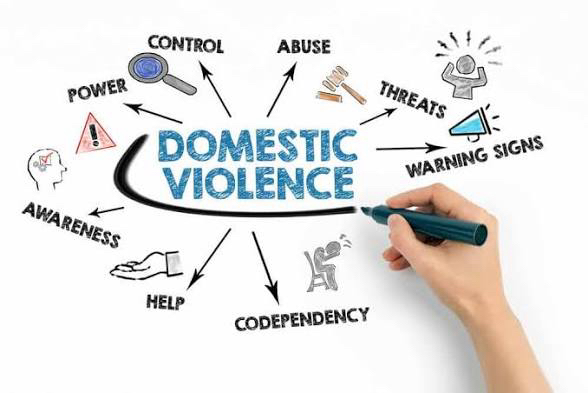
Characteristics of Trauma Bonding:

·        Intermittent Reinforcement: The abuser cycles between periods of abuse and kindness creating a sense of hope and dependence in the victim. Victims of abuse may be waiting for that next “feel-good moment” in the relationship that also keeps them trapped in a cycle of abuse and relief (https://www.domesticshelters.org, 2021).

v  This is also how many addictions keep you stuck. If everything were bad all of the time, you would grow tired and leave. But the intermittent reinforcement is how they maintain control.

·        Isolation: The abuser often isolates the victim from their support system, making them more vulnerable and reliant on the abuser ((https://medical newstoday.com, 2023).

v  I was not completely isolated physically from my support systems. But emotionally I was very isolated. He constantly told me that my friends and family didn’t have my best interest at hand. He would make up lies about things they said and assassinate their character behind their backs.

·        Fear and Insecurity: The victim experiences constant fear and insecurity, leading them to believe that they cannot escape the abusive situation (https://www.savantcare.com,2023).

v  The constant fear and insecurity that I experienced was, in fact, my prison cell. And I was afraid to leave even when the door was wide open.

·        Justification: The victim may rationalize the abuser’s actions or blame themselves for the abuse (https://thriveworks.com, 2024).

v  I was conditioned to believe that everything I did that made him angry was my fault. And it wasn’t. Now, I can see that his actions were because of his behavior, not mine.

·        Emotional Manipulation: The abuser uses emotional manipulation to control the victim’s thoughts, feelings, and behaviors (https://wondermind.com, 2023).

v  This right here was the #1 key factor for why I wouldn’t leave. He even told me, “No other man would ever put up with the things that I have to deal with in you. All of the good things about you, which aren’t many, are because of me. You are useless without me. I have given you everything you wanted. And disobeying me is the thanks that I get? Why do you need anti-depressants when there is no reason that you should be depressed.

Consequences of Trauma Bonding:

·        Difficulty leaving the abusive relationship.

·        Feelings of guilt, shame, and self-blame.

·        Low self-esteem and trust issues.

·        Mental health problems, such as depression, anxiety, and PTSD (https://www.savantcare.com,2023).

Trauma bonding kept me trapped in an abusive situation. People have said, “Why didn’t you just leave?” The problem lies in the way they you manipulate you into believing that everything bad that happens, no matter how minor, is the victim’s fault. And day after day, their hold strengths without you even realizing it. And in my case, I felt as though I was responsible for their thoughts and feelings. I constantly strived to be “good enough” or “well deserving enough” to see the person that he told and showed me he could be when we met. And quite frankly, it was always just a game. Their abusive self is “the real them.” Believe your instincts and the colors in which they present themselves. For that is who they truly are.

If you have read through this and have never been in a situation where everything you do is being controlled, consider yourself lucky. But don’t you dare sit there and say, “It was their own fault that they didn’t leave.” That is one of the most callous things that you can say to someone who is currently trying to survive and those that have survived finally leaving that situation no matter how long it took.

You have absolutely no right to tell me or anyone else how we should feel simply because you have not experienced it. I stayed much longer than I should’ve. And there are times when I still beat myself up for it. Now though, I give myself some grace for not knowing how to leave or recognizing what was going on in plain sight. It’s not just one event that causes this. It’s something that happens every single day methodically planned and executed by the warden in the relationship.

Once you leave, I highly recommend getting into therapy. Just because you think that no damage has occurred, doesn’t mean that it hasn’t happened. Even now, 19 years later since I left him, I have phobias, anxiety, depression, difficulty concentrating, and difficulty making decisions. He has left a mark that will last a lifetime. And some of the things that he did I’ll never recover from. He once told me, “You’ll never be without me no matter what you do!” And the truth is that, while he still doesn’t have total control over me, I still allow parts of him to live rent free in my head.

The next post will be something that represents those of us who have managed to leave and have an understanding through therapy how and where to put the responsibility where it truly belongs, on them.

To those who are still in these types of relationships, I see you even when you don’t openly identify yourself. To those who have left and still live in fear, I see you and you’re not alone. To those of us who continue to strive to change those hard-core beliefs that were instilled by way of threats, intimidation, and violence, I see you as well. None of you are alone. And not all relationships are like this. 

Find a therapist that you trust and open your soul to them. Coach has been a lifeline of compassion and understanding for me that I’ve rarely experienced. And she has never made fun of or questioned why I didn’t leave. Unconditional support and her teachings have made life possible for me many lonely nights. I will probably always struggle with some things and that’s ok. This process is certainly a marathon instead of a sprint. And there is no time limit for healing. The whole point is to continue showing up and moving forward in whatever way that might take shape. You are not on an island like you think. There are millions of us both male and female who struggle with the effects and consequences of domestic violence and abuse.

You are loved. You are wanted. And you deserve the good things that life has to offer. Thanks for reading! And I hope you look for the next blog in a couple of days that I post that will help you begin to find your voice. The power to heal is now and ours.

Affirmation: My story has power and inspiration through it.

***Don’t forget to watch the video!***

 #Thispuzzledlife

Why Pretending You’re Ok Is Dangerous?

“I was tired of pretending that I was someone else just to have a good relationship with people, for the sake of having friendships.”

-Kurt Cobain

Light the charcoal. Sprinkle the sage. Negative energy go away. Okie dokie! I thought today, while staying in line about mental health awareness, it would be a clever idea to explore why we pretend that we are ok when we aren’t. And what are the reasons for doing this?

When someone asks, “How are you doing?” Most of the time they just expect the typical answer, “I’m fine.” Truthfully, though, most people do not don’t give a shit about how you are really doing. And when you tell them, you are met with an instant cellular retraction. You are seen as boundaryless or too overbearing. The truth, however, is that most people don’t know how to deal with anything that’s perceived as abnormal. My opinion is, “You asked how I was doing? So, guess what? I’m going to tell you exactly how I’m doing.” I do that sometimes just to see the reaction of others. 

When I was doing my undergraduate studies, one of my beloved professors explained this very thing. And ever since, I’ve assessed those theories only to prove them right repeatedly. I am not saying this as a blanket statement. But the truth is the truth. People back away from what they don’t understand. That’s about them, not you.

It does not speak about you as a human being. We have been conditioned as human beings, as a species, to be accepted and wanted despite the personal cost. Social media is all about presenting something that the average person considers useful in some way. It does not mean that what you witness is how someone is truly feeling. The conditioning that is implied is that without millions of followers, gets labeled as unworthiness. So, we put on a happy face and try to stay in some form of societal compliance as “normal” which doesn’t have a definitive definition. But do you know what the term “normal” actually is? It’s a setting on a washing machine. The term “normal” is actually a subjective term that doesn’t have a concrete definition. It’s nothing more than someone’s interpretation and social constructs of mainstream behavior. 

When we tell people we are ok when we really aren’t, is a “hail Mary” attempt at acceptance. But when we do that, we deny our true feelings and experiences. A big turn off when dealing with people is how they tell me how I should or shouldn’t feel about a situation. What this does is minimize the person’s feelings. It’s not up to you to tell them that their feelings are “ridiculous.”  However, the damage has been done. You just sent an unspoken message to the individual who asked the question, that they are not worthy of your time. And it’s incredibly hurtful. And since they aren’t a therapist trained on how to respond appropriately and therapeutically, the damage that is potentially caused can be catastrophic. So, instead of a positive act of vulnerability, the vulnerability is now covered in shame. We can develop a fear of vulnerability based on that one experience. And we also tend to prematurely judge every person and conversation thereafter in the same light.

I can’t tell you how many times I have been told that my fears and phobias are preposterous. But the situation that caused the fear was in fact very real. And its people, who have never gone through the same precipitating factors nor situation, who seem to have all the “correct” answers. I have been told some of those very things when it took everything I had to just be vulnerable enough to tell someone what happened. It has created so many therapeutic  “pitfalls” because of the fear and shame that I was left with from the very beginning of my trauma history. So many times, I could’ve gotten help sooner, but I suffered in silence because of how unworthy I felt trying to tell the wrong person that I needed help. And sadly, there are many people who die by their own hand. Shame was the killer.

Sometimes all you need to do is just hold a “non-judgmental” space for someone to talk. You don’t have to, nor do you need to have the answers. You are NOT a therapist. You are a “sounding board” at best. However, “non-judgmental” space is usually not common unless you’re sharing space with a competent therapist who understands the powerful and most sought-after form of safety that deserves the utmost respect.

The most supportive thing you can say to someone who approaches you needing that “sacred space,”  is, “I might not know how to help you, but your feelings are valid and I will listen supportively until we can find a mental health professional to help you.” That simple statement can change the course of someone’s life. You don’t have to be smart. You just have to be a HUMAN. Thanks for reading! Keep smiling!

Affirmation: I am a work in progress, and that is okay.

***Don’t forget to watch the video!***

#Thispuzzledlife

It’s Mental Health Awareness Month

“What mental health needs is more sunlight, more candor, and more unashamed conversation.”

-Glenn Close

Light the charcoal. Sprinkle the sage. Negative energy go away. Okie dokie! Today is the first day of the month of May, which is also Mental Health Awareness Month. And unfortunately, the topic of mental health is often skirted or disregarded as something that isn’t acknowledged because of the “shame factor.” However, it is not a topic to be ashamed about. Mental health is such an integral part of being human and is something that must be discussed.

What are the issues surrounding the topic of mental health? Well, part of the problem involves societal stigmas, fear of judgment, and a lack of understanding. And the stigma usually surrounds negative stereotypes, incorrect information and cultural beliefs or a sign of personal failure. Give me a second to go a little more in depth about these issues.

1. Lack of Understanding-most people have little knowledge about mental health conditions which can lead to misconceptions and fear. And this includes immediate family, friends, co-workers, medical personnel and acquaintances. I have tried in my own ways to educate people about mental illness, as my daily living has revolved around the mental health system for the majority of my life. But no matter how much you try to explain things to people, they just can’t seem to let go of old ideas and opinions.

2. Negative stereotypes-Thanks to social media, mental illness is portrait in the media that mental illness is considered a sign of weakness, dangerous or violent. This further solidifies negative attitudes. While some of this is true regarding violent individuals, the majority of us are not dangerous people. And religious affiliation can also be another source of negative stereotypes. You wouldn’t believe some of the nasty and fearful looks that I get from simply wearing a baseball cap about PTSD. Sometimes I get asked, “What branch of the military were you in?” I simply tell them, “I didn’t serve our country. I developed PTSD because I’ve been abused for a large majority of my life. So, technically, I’ve been fighting a war my entire life.” They usually silently turn around and back away. Some have asked, “Why do you tell people?” And my answer is always, “Because I’m not ashamed of having a mental illness. It is what it is. And I’m not responsible for other’s ignorance. I simply state the true facts and give the shame back to where it belongs. 

3. Fear of judgment-many people fear judgment for their mental illness. One thing you have to understand is that people are usually their own worst critic. So, your judgment will never be as potent and the person with the mental illness. In my case, telling someone that I have Multiple Personality Disorder makes people retract, mainly because their only source of reference is through Hollywood. And we all know that Hollywood never really tells a story accurately. It induces the “fear factor” in most people. And when I speak this truth, most people are also taken aback because I’m so forth coming with my own  struggles. You might notice my quirkiness at times. However, you would never know when my other parts switch out unless you are around me and I explain who they are and their function. I don’t fear judgment from people. I embrace their ignorance and do my best to “stomp out stupidity.”

4. Fear of discrimination-people fear losing jobs, housing or other opportunities due to their condition. Look, I have lived under a cloud of discrimination since the day I was born. I’m gay. I have a mental illness. And I love to smoke weed. But I’m also very educated. And somehow when you are “out and proud” that automatically puts a label on you. And well, that’s their problem not mine. Even within my own family, I face discrimination. And when I speak about mental health topics, I’m revered as not being nearly as intelligent as others. Even though I have a master’s degree in counseling psychology which qualifies me to be able to diagnose. Make no mistake, I might’ve done a lot of stupid things in my life, but I am in no way dumb. And I face discrimination head on. 

I completely understand that everyone isn’t at the same level of progress with these issues. And it has taken years of therapy to bring me to the point where I am. Mental illness is nothing to be ashamed of. And most people have mental illness in varying degrees. However, a lot of it has never been diagnosed. Individuals hide and suffer in silence because of the shame that they carry regarding this topic. And you absolutely shouldn’t be. Mental health is just as important and maybe more so than physical health. Because poor mental health can also cause physical discomfort.

Embrace what is and be responsible enough to get in therapy. You will be glad you did. Cannabis has increased my quality of life much better than pharmaceuticals. And this is another topic that is shame based. There are those still who are “closeted” cannabis users who also reap the benefits of the plant. And as someone who lived in a closet for many years, I can tell you that no one is meant to be smothered and silenced. Everyone deals with mental illness and fears the repercussion of others differently and at their own pace. I can’t speak for anyone else, but with me, you will always be accepted. 

Educate yourself about your own mental illness not based on movies, other people’s subjective opinions, but on the scientific research and real truth. Face your fears and get involved in therapy and do the challenging work that will benefit you overall. And let the opinions of others roll off your back like water on a duck. Their opinions are just that. They are not facts. It is purely unadulterated ignorance. But that can change if they are willing to do so.

If you are an ally on the topic of mental illness but still have questions, we won’t cook you or eat you. Respectfully ask for some clarification. It is a horrible feeling to suffer in silence over half truths and out right lies regarding mental illness. And sadly, I have had friends who refused to go to therapy for those reasons. And they are now dead from suicide. But everyone is entitled to love, care and compassion. And, yes, that also includes you. Thanks for reading! Stay healthy. Stay happy. Keep smiling. And keep reading this blog.

Affirmation: I trust myself  to make decisions that align with my values and goals.

***Don’t forget to watch the video!***

#Thispuzzledlife

What Is My Purpose?

“Nothing is more creative…nor destructive…than a brilliant mind with a purpose.”

-Dan Brown

Light the charcoal. Sprinkle the sage. Negative energy go away. Okie dokie! Wow. I had no idea that I would write about this topic today. And it’s a concept that has haunted me for many years. What is my purpose in life? 

Is my purpose to see how many punches I can take and still walk out of the fire alive? Ok. I’ve done that and continued to do that on a daily basis. Is it to conform to societal standards of what “normal” is? That will never be me. Is it to tackle difficult subjects that make people cringe? You’re getting warmer. Well, let me see if I can discern the information that I know without a doubt. 

1. I love helping people. Helping people is a burden on your soul. You don’t decide to help people because of a dollar sign. Helping people whether on an ambulance or in an addiction facility has always been my niche. My actions are done because of a calling that I was born to do. If anyone needs help and I can provide it, I will. That is one of the things that my family dynamics impressed upon me.

2.  Helping and caring for animals. You also don’t just decide to have compassion for animals. Some people say these things and yet I watch them beat their animals without constraint. My ex-husband has always said that he was an animal lover. That is the farthest thing from the truth. I’ll never forget the screams of my animals when he would take a belt, in the middle of the night, and go beat them. And I was completely powerless to defend them. When I left that horribly abusive situation, my animals were killed. My animals and the other animals that I interact with are my kids. I learned a long time ago, that I could trust animals when I couldn’t humans.

3.  Speaking up about difficult topics. I have no problem talking about really difficult topics in society. Sometimes it doesn’t make me the most popular person. And I don’t care. The topics of racism, mental illness, addiction, abuse, medical cannabis, suicide, self-harm, sexual abuse, puberty, predators, LGBTQ+ equality, rape, parenting or any other topic that makes us cringe. What you don’t see is how sometimes I struggle discussing them. Part of that is because of how I was raised. In the deep south, we are taught to not create any waves as it might reflect poorly on the family. And to know our places as children which was to always respect your elders without question. But what if you are a bystander to something that is abusive, and you don’t speak up? That’s what keeps me up at night. The personal information that I blog about that has happened or is currently happening in my life isn’t always pretty. And I realize that I’m not the savior who can swoop in and rescue people. I can, however, do my part as a human being. And, yes, I still worry about things that I cannot control and still become obsessions.

4. Writing is a passion. I began writing out of necessity. When I left my abusive therapist, I felt completely broken. The person I went to for help betrayed me in a way that continues to affect me. And unless you have been abused, you have no idea the hurdles that would have to be overcome to continue moving forward. And the complete disconnect between your emotions and your brain So, I began writing about topics that were affecting me in that moment. And suddenly, I began to get relief even if I hadn’t found the answers that I needed. I finally felt like I had a voice that deserved to be heard. I was tired of remaining quite as I had been expected to do my whole life. That’s when I realized that I wasn’t all those names that I had been called. I was someone who had information and experiences to share in order to help others. I have always felt alone no matter how many people I was around or despite the number of smiles that I put on my face. Blogging itself is a platform to help others in similar situations understand that they are not alone. Had someone just explained to me that my situations were not ok and that millions of people, worldwide, suffer in silence as I have, maybe that sense of loneliness would’ve diminished. However, when it’s happening to you especially all of the manipulation and brainwashing that occurs, you cannot see past the moment. Abuse leaves you questioning everything about the next person and even those in my family. I knew one thing for sure, I could not remain quiet. 

5. Humor brings me enjoyment. Humor has always been one of my greatest coping skills. I go through life as a literal thinker. So, if someone has a “Freudian slip” I will laugh myself silly even if that slip up was from myself. Humor a lot of times was used against me to make me a public spectacle. And it was done in a very demeaning way. As a way of life, I learned how to beat someone to the punch on a smartass comment. I always try to see the humor in most situations. And when there is no humor, I will find a way to interject some of my own. This gets me in trouble sometimes because that’s not conforming to those around me. And I’m expected to just let crazy happenings go without acknowledgment. That’s like putting a plastic bag over my head and being expected to breathe when the air is gone. I will always point out the sometimes-ridiculous way a situation looks. And I’ll probably write a note about it in my phone to use at a later date. I’m not right or wrong. It’s just how I operate.

My passion and purpose is to help others understand that just because you have taken the broken road in life doesn’t mean that you still can’t achieve happiness and also help others. I write about a lot of maladaptive behaviors that I continue to struggle with. But I also share my experience, strength and hope with those need that need the validation that they are not inherently bad or unworthy of happiness, love and inclusion. I still struggle with that concept. If you are a human being, you will fail. You will fall. You will be forced to confront your demons head-on. And it will scare the literal shit out of you. You will be forced to look at your part in situations. If you do not, you will remain stuck. You except your responsibility and move on whether or not the others do the same. You are responsible for only your feelings and emotions that are constantly changing. If they don’t except their responsibility, then they will shift the blame back to you. Push that shit out of the way. Hold your head high. And leave those people like a boss. You are worthy. You are loved. And you are enough!

“Be a lamp, or a lifeboat, or a ladder. Help someone’s soul heal. Walk out of your house like a shepherd.”

-Rumi

***Don’t forget to watch the video!***

#Thispuzzledlife