
Veteran Suicide

“The soldier above all others prays for peace, for it is the soldier who must suffer and bear the deepest wounds and scars of war.

-Douglas McArthur

Light the charcoal. Sprinkle the sage. Negativity energy, go away. Today, I want to discuss veteran suicide. I know that this topic has seemed to get old and fast. However, I believe that the more we talk about the harshness of life, the more the stigmas will begin to disappear.

In 2022, the most recent year for the current data, 6,407 veterans and 41,484 nonveteran adults died by suicide. The rate among veterans was 34.7 per 100,000 compared to 17.1 per 100,000 for nonveterans. Since 2005, veteran suicide has risen faster than any other group. And these rates are unacceptable.

The veterans who died by suicide in that year, 40% were under the care of the Veterans Health Administration. Among those patients, who were also diagnosed with a mental health disorder or substance abuse disorder, there were 56.4 per 100,000, which was twice the rate of those without a diagnosis. And among 1,548 veterans who died by suicide 64% were diagnosed with depression, 43% had an anxiety disorder, 40% had PTSD, and 32% had an alcohol use disorder. However, the highest suicide rates were associated with veterans who had sedative use disorder which include benzodiazepines, barbiturates, and opiates (www.rand.org, 2025). And the stigma about mental health in the military further increase this problem.

Aspects of Veteran Mental Health stigma:

·       Fear of judgment and perception:  Veterans worry about how seeking help will affect all areas of their lives and especially on career repercussions.

·       Military culture: The “warrior ethos” which emphasizes self-reliance and stoicism create barriers to seeking help.

·       Loss of security clearance: Some fear that seeking mental health treatment will lead to revocation of security clearances.

·       Impact on treatment: stigmas can lead to untreated mental health conditions, substance abuse and increased risk of suicide.

·       Self-stigma: Veterans may internalize negative societal views about mental health which can lead to shame, self-blame, and more reluctance to seek help (https://oxfordtreatment.com, 2025).

As an advocate for medical cannabis, I believe that our veterans should be given an ounce of cannabis the minute their feet hit US soil upon returning from active duty. As I personally deal with PTSD, there is not another medication on the planet that can bring me relief like cannabis can. And it’s such a safer alternative to alcohol, opiates, and benzodiazepine medications.

Currently,  the Safe Healing Act, which was introduced on February 4, 2025,  is designed to prohibit the Secretary of Veterans Affairs from denying a veteran benefit administered by the Secretary by reason of the veteran  participating in a State-approved marijuana program and other purposes. But unfortunately, there is only a 3% chance of being enacted (www.govtrack.us, 2025). And I consider this utterly ridiculous. There is an unmistakable problem with veteran suicide. It appears Big Pharma is still in the way of progress. I wonder how many people who oppose this bill must suffer, daily, with the horrible effects of PTSD, anxiety, and chronic pain that “Big Pharma” can’t seem to help?

Our returning soldiers are faced with horrors that no one understands until they’ve been there. And though I have never served our country, I can tell you that the above-mentioned mental health disorders have also almost taken my life many times. The symptoms are horrific in nature. Put chronic pain in the mix and suicide often seems like the only answer to have a break, though it be permanent, for even a moment of peace.

Veterans, in my eyes, should be held to the utmost respect. They should be the highest paid employees before professional athletes. And we as a country should make sure that the best treatment is available to them for the rest of their lives. Some have paid the price of their lives on the battlefield. And a high percentage of others pay with their lives when they return home. But instead of treating them like the heroes like they are, they are often discarded by the government that they so proudly serve. 

Is cannabis the only answer? Not at all. However, while they find the modality that works for them, I think that cannabis could lighten the load and make their futures seem a little brighter. Discarding them along with all the judgmental stigmas only adds to the problem. And until this is rectified, we will continue to lose those beautiful people who are willing, at any moment, to lay down their lives for our freedoms. Shame on the United States of America for treating them like that!

I know reading this is not easy. But we as a nation must stand up for these individuals who continue to pay the price every time, they open their eyes. Let’s get past the “reefer madness” ignorance and allow our veterans the opportunity to extend their lives at home. A special thanks and salute to one of my favorite veterans who I’ll call Joe. Thanks for reading! And God Bless America!

Affirmation: Bring out your inner warrior

***Don’t forget to watch the video!***

#Thispuzzledlife
National PTSD Awareness Day

“Always remember, if you have been diagnosed with PTSD, it is not a sign of weakness; rather, if is proof of your strength, because you have survived!”

-Unknown

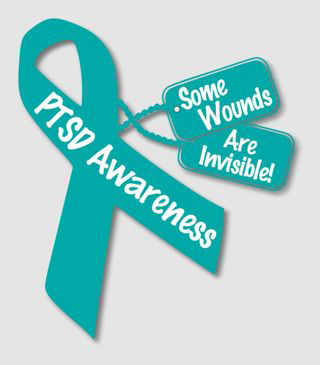
Light the charcoal. Sprinkle the sage. Negative energy go away. Today, I want to take time out from celebrating Pride, to give light to National PTSD Awareness Day. This one hit hard as I’ve lived with PTSD longer than I’ve lived without it. And there are so many of us who don’t make it to the other end of the tunnel. It’s an incredibly dark place to wake up to and go to sleep with every night.

Post Traumatic Stress Disorder (PTSD) dates back to ancient civilizations and military conflicts. Terms used early on included “combat-related stress,” “shellshock,” “combat fatigue,” and “railway spine.” In the 1800s and early 1900s, the “talking cure: was popularized by Sigmund Freud and introduced in medical literature. And the treatment went from psychoanalysis to electric shock treatment. By the 1950s, the treatments had become more humane. However, now people would not admit to any traumatic symptoms due to the stigma. So, group therapy and psychotropic medications were introduced (blackbearrehab.com, 2025).

In the 1970s Vietnam veterans began experiencing a lot of psychological problems that persisted even after returning home. And survivors of domestic abuse were also included. In the 1980s, PTSD was officially recognized as a mental health problem. Diagnostic and Statistical Manual of Mental Disorders adopted the diagnosis where it has remained (blackbearrehab.com, 2025).

PTSD is a developed from a traumatic event. C- PTSD when a traumatic event continues for months and years or multiple events occur. The intrusive thoughts, flashbacks, insomnia, avoidance, memory problems, detachment from friends and family, feeling emotionally numb, hyper startle, irritability, trouble concentrating, impulsive behavior, paranoia, severe anxiety, nightmares, suicidal ideations and actions and uncontrollable thoughts about the event. And over time, these symptoms completely devour who you once were (MayoClinic.org, 2025).

I know that PTSD is typically related to soldiers. I am here to tell you that I never went into the military. But the PTSD that I deal with, as a result of domestic violence, grabbed hold of me and has never let go. It has completely stripped me of everything that I used to enjoy. I don’t care about relationships. I question people about their intentions, even if they’re pure and good. I’m constantly waiting for the next shoe to drop. I don’t have typical reactions to being scared. I could see a moth out, of the corner of my peripheral vision, and then jump and scream like Jeffery Dahmer was staring at me and about to take the first bite. I face the stigmas of both friends and family mainly due to a lack of understanding. However, the reasearch information is everywhere. Sometimes others just need to their own leg work. I have come to realize that instead of trying to find out how PTSD affects someone that you love, it’s “the easy way out” to just to be dismissive, embarrassed and judgmental instead. The attitude is “just change X behavior.” Without having a solution, the resounding message of “just make it go away” further ostracizes the person that you say you care about. And so the anticipated glimmer of hope dissipates further isolating the individual. And sadly, can lead to suicide.

PTSD is not about you, it’s about them. It’s just a diagnosis until it’s “you” that experiences it every day. It has taken me down to the point of putting a gun in my mouth. And because living in the abuse was so severe, I actually pulled the trigger after pointing the gun at my torso. It missed my heart by only a few centimeters. Nothing was messed up to the point of needing surgery. But self-harm is something that I’ve dealt with since I was a 13-year-old child. And I had no idea how to deal with all the overwhelming emotions of abuse. In that cold, dark closet where I began to self-harm, and as maladaptive as the behavior is, it worked. It was the only thing that worked to bring me back to complete balance. But the problem is that it became a true addiction issue that I continue to struggle with. And before you ask, yes I’ve done a lot of therapy. It’s not that the therapy doesn’t. It’s that the addiction is that strong. 

PTSD is a true injury on the brain. The brain’s job is to help you survive in any way possible. So, we reach for anything to help calm the barrage of intrusive thoughts, memories, smells and sounds. And once it’s been damaged through a traumatic event, it creates a “work around” solution. What typically works? Self-harm and substance abuse creates almost instant comfort. You don’t have to wait for 6-8 weeks to reach your therapeutic dose efficacy to begin working. It’s an immediate fix that some of have to use just to stay alive.

Cannabis was recommended when all other “Big Pharma” medications failed. And it has saved my life on a daily basis ever since. Cannabis seems to put a cloud over my brain saying, “Settle just for a moment.” And for that moment, I can take a break from the constant paranoia and overstimulation of a brain that wanted to do nothing more than survive. And that, is my battlefield. It wasn’t in Iraq, Afghanistan or Vietnam. My battlefield is everywhere I go. I fear people and social situations in a way that most cannot understand. 

It literally takes me about a week in advance to start prepping to leave my house just to go to pick up medications,that I,unfortunately have to take. But I don’t take anymore psych meds. I was extremely sick, coming off all the meds that I had been begging for over two years to be tapered off. And I got tired of waiting, so I did it myself. I don’t advise this way because it was a really miserable process. However, I was at a point of desperation. And now about 6 months later, I feel like a new human being after the toxic feeling of all the medications. All of my true feelings and emotions have awakened, and I really like feeling somewhat comfortable at times.

My personal opinion is that anyone returning home from the active duty should be handed an ounce of weed the minute they step off the plane to do with as they wish. And it would be perfectly ok if they gave it away. That’s like paying it forward in “Weed-O-Nomics.” As it stands, soldiers come home from a war that never ends. And they are committing suicide at a rate of 22 soldiers a day. And that is less than unacceptable.

As the topic of cannabis continues to circulate among social circles and national politics, I hope that veterans from our military will step out against the shame that is felt from social stigmas. And reach for the plant that can “help take the gun out of your mouth.” Cannabis doesn’t cure PTSD because it wasn’t the one who caused it. But it does make things much more tolerable.

Thanks for reading! Happy Pride everyone!

Affirmation: I am resilient and capable of healing.

***Don’t forget to watch the video!***

#Thispuzzledlife

I Love This Plant!

“I find it quite ironic that the most dangerous thing about weed is getting caught with it.”

-Bill Murray

Light the charcoal. Sprinkle the sage. Negative energy go aways. Okie dokie! Today marks my second favorite time of the year. Yep it’s the month of 420! Not everyone agrees with it. For me though, it has saved my life. To the naysayers, there is absolutely nothing you can tell me negatively that I’ll believe about the plant called cannabis.

Cannabis has been around for forever and ever amen with a lot of negative connotations. My own family still takes issue with the fact that federally it’s still considered illegal. And you can’t really have a conversation about it because some of them are not willing to discuss the science. In a lot of ways vilifying this plant because of the Nancy Reagan 80’s seems to have stuck. I have family members that are earthy, crunchy thinkers in regard to health. And their lives all about healing with fruits, vegetables and herbs. But so am I. I like fruits, vegetables and herbs too. I just smoke my herbs. The side effects are very simple: sleepy, happy and hungry. “Big Pharma” on the other hand are constantly being sued for all of the harmful side effects. No thank you to medications that cause more harm than good. And drinking and driving home is the much safer option?

Over the years cannabis has gotten a horrible name. It’s not because it’s a dangerous drug. In fact, cannabis is one of the healthiest plants available. Our country has now made it a priority to invest money into science and discovering the healing properties. And there are scientific studies proving that cannabis isn’t as bad as once thought.

Unlike alcohol and other harmful drugs, cannabis continues to provide people with life saving medicine as it has for me. It’s healing cannabinoids help with chronic pain, epilepsy, anxiety, multiple sclerosis, PTSD, alzheimer’s disease, chemotherapy induced nausea and vomiting, insomnia, cancer, fighting cancer, inflammatory bowel disease, tourette syndrome, crohn’s disease, depression, HIV/AIDS, muscle spasms, anorexia, amyotrophic lateral sclerosis, addiction, inflammation,parkinson’s disease, PTSD, reducing blood pressure, anxiety disorders, stabilizing blood sugar, decreasing overdose rates, opioid dependence, spinal cord injuries, dystonia, dementia, glaucoma, schizophrenia and other medical and psychological problems (ncbi.nlm.nih.gov, 2017).

The days of believing that cannabis is a drug that causes great bodily harm are over. Hallelujah! Now let me point out one thing. Cannabis isn’t for everyone just like certain pharmaceuticals aren’t. And I agree that some people might have some type of addiction issues. However, there is no physical withdrawal that occurs. It is impossible to overdose on cannabis. You might take or use too much, causing intoxication. But that’s not the plant’s fault. If you have a problem with addiction to this, it is a “you” problem not the substance. 

I can only speak for myself as one who has a lengthy history of addiction, I have never had a problem with marijuana. The problems have always come back to myself and the maladaptive ways of coping. Buying marijuana off the streets where most of it has come from cartels, it can be sprayed with poisons which increase the effects and dependency. And this is also where a lot of the paranoia stems from. Yes, there are people who complain about paranoia induced by cannabis that is bought from very safe dispensaries. These cases are very minimal on a broad scale. So, marijuana might not fit you as an individual. However,for people like me who continue to reap the benefits of this plant minus the addiction, I can say that it has truly saved my life. And as a result has lowered the amount of suicidal ideations that used to plague me on a daily basis. 

The effects of PTSD continue to complicate my life. The overwhelming symptoms are not near what they once were. Cannabis does NOT cure PTSD. It simply helps with the unfriendly symptoms and side effects. I have gone from being on close to fifteen psychiatric “big pharma” medications down to zero. I didn’t see the point of taking Parkinson’s medication for a side effect of the anti-depressant. Not to mention that I wasn’t able to experience emotions in a way to gauge how I was healing. And everything from the waist down was literally dead. If that’s the price you pay for happiness, then I would rather be sad. I still struggle hard sometimes. And that is where working with coach is other beneficial piece to my treatment. If it is not a substance that doesn’t work for you then move on. But don’t demonize this medication for those of us that it helps to ensure survivability. Thanks for reading! Keep moving forward.

“It is irresponsible not to provide the best care we can as a medical community, care that could involve marijuana. We have been terribly and systematically misled for nearly 70 years in the United States, and I apologize for my own role in that.”

-Dr Sanjay Gupta, Neurosurgeon

***Don’t forget to watch the video!***

#Thispuzzledlife