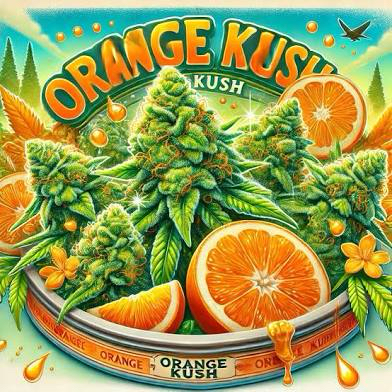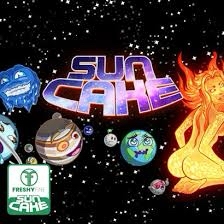

Budtender Moment: Suncake Strain Review

“High isn’t a destination. It’s a perspective.”

-Unknown

Light the charcoal. Sprinkle the sage. Negative energy go away. Today, I want to tell you about a strain that is good for the time of year where we all begin enjoy the warm sun. This strain is called Suncake.

Suncake is a 60/40 indica-dominant hybrid. It is a cross between Sunset Sherbet x Wedding Cake. Sunset Sherbet is a cross between Girl Scout Cookies x Pink Panties. Wedding Cake is a cross between Triangle Kush x Animal Mints. It’s flavoring consists of a sweet, creamy, berry, vanilla cake, and tropical citrus. However, I just identified light citrus notes.

Top terpenes in this strain are Limonene, Caryophyllene, and Linalool. Patients report relief from conditions such as insomnia, chronic pain, appetite loss, nausea, chronic stress, depression, and mood swings. This strain I would call an easy and slightly indica dominant strain. Yes, you can use this during the day as long as you’re an experienced indica smoker. Novice smokers might enjoy this one better as night. Either way, it does not act real indica. The effects feel much more like a balanced hybrid with a nice elevation in mood.

Affirmation: I am a natural stoner.

***Don’t forget to watch the video!***

#Thispuzzledlife

Self‑Harm Awareness Month: Where Growth Happens and My Nervous System Tries Its Best

“I didn’t choose the healing journey. The healing journey chose, dragged me and asked for gas money.”

-Unknown

Light the charcoal. Sprinkle the sage. Negative energy go away. It’s Self‑Harm Awareness Month, and if there’s one thing this month teaches us, it’s that healing is messy, sacred, and occasionally accompanied by a cat sitting on your chest like a furry emotional support paperweight.

Self‑harm is one of those topics people whisper about like it’s Voldemort, taxes, or the time they accidentally liked their ex’s Instagram post from 2014. But here? We talk about it with honesty, compassion, and the kind of humor that keeps us from spontaneously combusting. Self‑harm isn’t about attention. It’s about pain. And the people who say otherwise are usually the same ones who think essential oils can cure a broken femur.

Self‑harm doesn’t happen because someone is weak. It happens because someone is overwhelmed, hurting, or trying to survive emotions that feel too big for one body. It’s a coping mechanism. Not a character flaw. But the world loves to misunderstand what it doesn’t want to deal with. People will say things like, “Just think positive!,” “Have you tried yoga?,” “My cousin’s neighbor’s dog used to feel sad too.” Ma’am. Self‑harm is not cured by downward dog or inspirational throw pillows.

Let’s look at how the addiction occurs. The brain notices that shift and files it under: “This worked.” Not because it’s healthy. However, because it changed the emotional state quickly. The body reinforces it by sending a rush of endorphins, adrenaline, and dopamine. These chemicals temporarily reduce emotional pain or numbness. That relief, even if brief, can make the brain want to repeat the behavior. This is the same reinforcement loop seen in many addictions. Next, the cycle becomes automatic. And with overtime urgency , the brain starts linking stress → self‑harm, numbness → self‑harm, shame → self‑harm, and emotional overload → self‑harm. It becomes a reflex. A pattern, not a personality trait. A survival strategy, not a moral failing. And then shame strengthens the cycle. People who self‑harm often feel guilt, embarrassment, fear of being judged, or the pressure to hide. Those feelings can increase emotional distress. Which can then trigger the urge again. It becomes a loop that’s incredibly hard to break alone. And finally, it’s not about wanting to die. For many people, self‑harm is about wanting to feel something, wanting to feel less, wanting control, wanting relief, and wanting the emotional noise to stop. It’s a coping mechanism that becomes addictive because the pain underneath it is overwhelming. People don’t heal because they’re scolded. They heal because they’re understood.

What does help? Why don’t you try some compassion, support, safe conversations, professional care, people who don’t minimize your pain, and a community that refuses to let shame win. Some days you glide. Some days you wobble. Some days you crash into a display of discounted cereal and pretend it was part of your spiritual journey. Healing is allowed to be imperfect. You are allowed to be imperfect. You are allowed to take up space while you figure things out. “Keep going. Rest when you need to. And stop carrying pain alone.” You deserve support. You deserve compassion. You deserve to be here. And you deserve to heal without shame breathing down your neck like a judgmental church lady.

Self‑Harm Awareness Month isn’t about fear. It’s about understanding. It’s about breaking silence. It’s about reminding people they’re not alone. Not now, not ever. So, here’s to choosing growth even when it feels like a group project we didn’t sign up for, choosing compassion even when our patience is on backorder, choosing to stay when our brains are acting like and the whole system is like, “Ma’am, I was not built for this.”

Then light your sage, drink your water, moisturize your spirit, and strut into the rest of the month like a woman who has survived every plot twist life has thrown at her. Including the ones that arrived unannounced, barefoot, and holding a casserole of chaos. Because you’re still here. You’re still growing. And honestly? You’re doing better than half the people who think essential oils are a personality. 

And as we wrap up this emotional rollercoaster of a topic, complete with sage smoke, hydration, and my nervous system acting like it’s auditioning for a disaster movie. It is like trying to assemble IKEA furniture with no instructions, three missing screws, and a mysterious extra piece that definitely wasn’t in the box. I’ve also realized something important. And it is that healing is basically like trying to reboot a Wi‑Fi router from 2007. You unplug it, you wait, you pray, you bargain, you threaten it, you light a candle, and somehow it still blinks at you like, “Girl, I’m doing my best.” Same, router. 

Here’s to all of us out here choosing growth even when our brains are running on 3% battery. Choosing compassion even when our patience is on backorder. And choosing to keep going even when life feels like a Walmart parking lot at 2 a.m. You’re doing your best, you’re sweating, you’re questioning your life choices, and at some point you whisper, “If this thing collapses, I’m blaming Sweden.” Thanks for reading and remember, Healing is holy, humor is medicine, and you are too stubborn to give up now. But you keep going. Because that’s what we do. And if anyone tries to judge your healing journey, just smile sweetly and say, “Sweetheart, I’m busy becoming emotionally stable. I don’t have the bandwidth for your nonsense.” Thanks for reading! Get educated.

Affirmation: I honor my healing by choosing compassion over shame, boundaries over chaos, and growth over the nonsense that used to break me.

***Don’t forget to watch the video!***

#ThisPuzzledLife
Democracy, Sage, and Whatever This Year Thinks It’s Doing

“At this point, I’m not sure if I’m fighting for democracy or just trying to survive a year that keeps acting like it’s on bath salts.”

-Unknown

Light the charcoal. Sprinkle the sage. Negative energy go away. If this year had a Yelp page, I’d give it one star and a strongly worded paragraph. We are thirty‑something days into the mess of 2026, and I already feel like I’ve aged a decade. I’ve developed three new stress wrinkles. And spiritually relocated to a hammock in the void. Every morning, I wake up, stretch, hydrate, and whisper, “Lord, please don’t let the news be stupid today.” And every morning the universe replies, “Lol, girl… buckle up.”

This year is already acting like it’s on a Red Bull and trauma cocktail, and I’m just trying to keep my chakras aligned and my blood pressure below “boiling crawfish water.” Because friends, we have made it through one month of this year, and I already feel like I’ve lived through three seasons of a political horror series that nobody asked for. One month down, eleven to go in this year, and I’m already spiritually dehydrated, emotionally crunchy, and mentally on airplane mode.

But before we collapse into a heap of snacks and despair, we need to remember something. We are living through one of the most crucial moments in our country’s history. Not the fun kind. Not the “look at us making progress” kind. The “why does it feel like the universe put us on the wrong timeline” kind.

I’ve lived through some terrifying chapter moments where the country felt shaken to its bones. And now, in these recent years, we’ve watched scenes unfold in our own streets that feel like they belong in a dystopian movie Not in the United States of America. It’s heartbreaking. It’s exhausting. It’s infuriating. But here we are. Still standing. Still fighting. Still lighting sage like it’s a full‑time job.

This year isn’t just another year. It’s a battle for the soul of our democracy. And for the freedoms that generations before us fought, marched, bled, and prayed for. And yes, it feels like those freedoms are hanging on by a thread. A frayed, overworked, overstressed thread that needs a nap and a snack.

We cannot sit back and hope the courts fix it. We’ve seen enough to know that institutions don’t always protect us the way they should. So, we do what people in this country have always done when the system fails. We raise our voices. We show up. We refuse to be silent.

And if that means losing friends, family members, coworkers, or that one Facebook cousin who thinks memes are research? So be it. Democracy is not a group project where everyone gets an A for showing up. You pick a side. You stand for freedom and equality, or you stand with the people trying to dismantle them. There is no middle ground left.

And let me be clear. If someone chooses to align themselves with cruelty, corruption, or movements that excuse harm, they will not be around me or the people I love. Period. Boundaries are healthy. Boundaries are holy. Boundaries are the reason some of us are still sane. Because the same folks who scream “family values” the loudest are often the ones forgetting what values actually are. They’ll clutch their pearls over drag queens reading storybooks. But stay silent when real harm happens in their own communities. The hypocrisy is so strong it could power the entire state of Mississippi if we could bottle it.

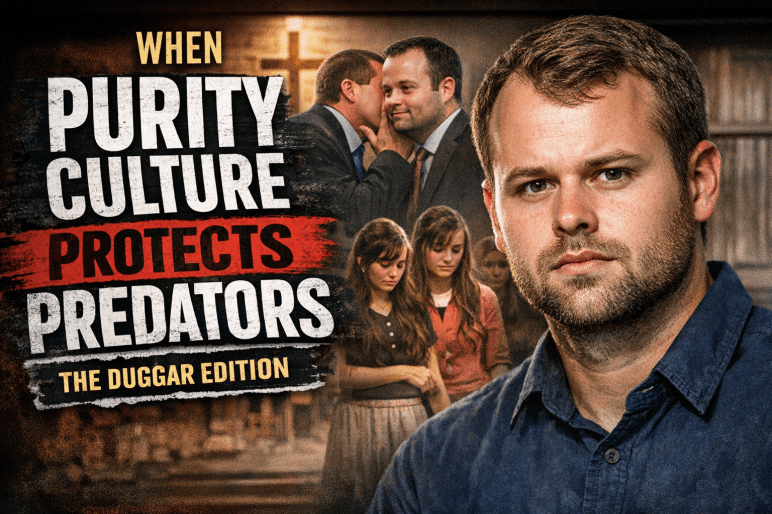
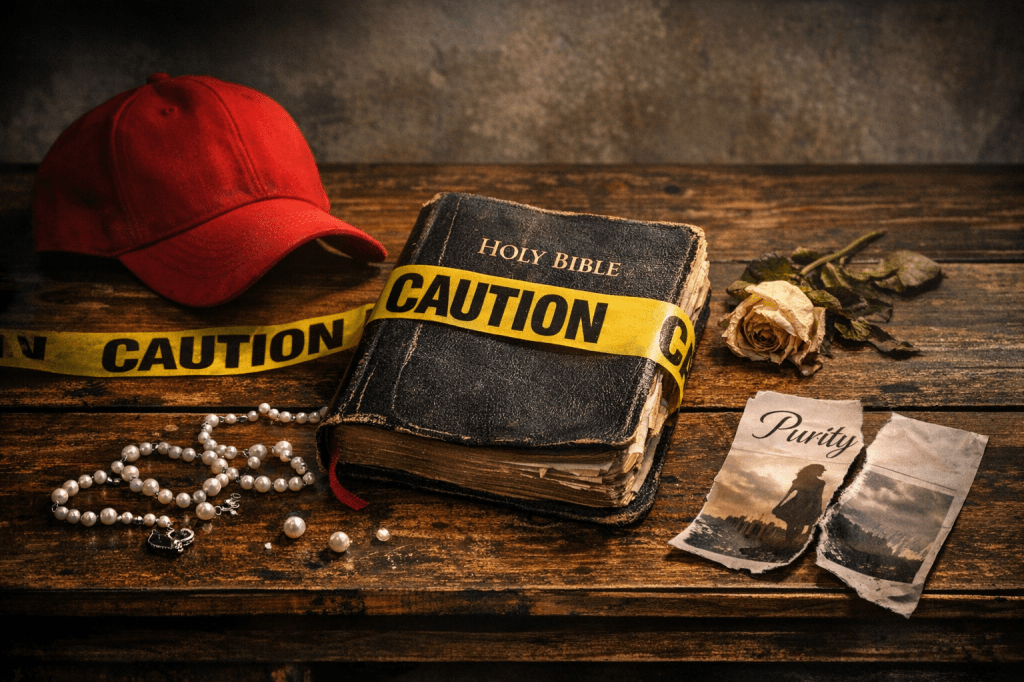
And don’t even get me started on “purity culture.” The idea of signing my virginity over to my father? Absolutely not. I would rather have a hysterectomy with a ballpoint pen. Here’s the real truth beneath all the rage, humor and exhaustion. We will not have a future if we don’t fight for the present. Democracy doesn’t disappear all at once. It erodes, inch by inch, while people look away. And once it’s gone, it’s gone.

So, we stay loud. We stay vigilant. We stay connected. We stay hopeful even when hope feels like a thrift‑store candle burning on its last wick. Because the future is watching us. And we are not going down quietly. As we drag ourselves through the rest of this year like a Walmart buggy with one busted wheel, let us remember that we are tired, yes. We are stressed, absolutely. We are one headline away from screaming into a pillow, correct.

We are also loud, alive, unbothered in spirit, and too damn stubborn to let democracy slip away on our watch. So, light your sage. Charge your crystals. Hydrate your soul. And prepare your voice because silence is a luxury we cannot afford. We will fight. We will vote. We will show up like the ancestors are watching because they are. And when this year tries to test us again, we will simply look it dead in the eye and say, “Not today, demon.” Thanks for reading! And keep hope alive. 

Affirmation: I stay grounded, loud, and unbothered, because my spirit refuses to let chaos, clowns, or corrupt leaders dim the light the ancestors handed me.

***Don’t forget to watch the video!***

#ThisPuzzledLife
Children of Addiction: The Invisible Story

“What cannot be communicated to the mother cannot be communicated to the self.”

     -John Bowlby

Light the charcoal. Sprinkle the sage. Negative energy go away. Some topics require us to slow down, breathe deeper, and open our hearts a little wider. Children of Addiction Awareness is one of those topics that are tender, urgent, and often hidden in plain sight. When we talk about addiction, the conversation usually centers on the person struggling. But in the quiet corners of those stories are children who carry the weight of what they cannot name.

They are not statistics. Not headlines. Not “someone else’s problem.” They are real kids. Real families. Real hearts trying to grow in soil that isn’t always steady. You don’t need a degree or special training to understand this. However, you just need to know this. When addiction lives in a home, children feel it in their bones. Even when they don’t have the words. Even when they pretend everything is fine.

Children growing up in homes affected by addiction often learn to read emotional weather patterns before they learn to read books. They become experts at sensing tension, anticipating conflict, and adjusting themselves to survive unpredictable environments.

They are the kids who:

  • Tiptoe around moods.
  • Become caretakers far too young.
  • Hide their fear behind perfection or silence.
  • Carry secrets that feel too heavy for their age.
  • Love their parents fiercely, even when life feels chaotic.

These children are not defined by the addiction around them. But they are shaped by it in ways that deserve understanding, compassion, and support.

Kids who grow up around addiction often learn to:

  • Stay quiet
  • Stay small
  • Stay out of the way
  • Stay “strong” even when they’re hurting

They become experts at reading moods, hiding feelings, and pretending everything is okay even when it’s not.

Growing up with addiction in the home can create emotional landscapes that are confusing and overwhelming. Many children experience:

  • Unpredictability: never knowing what version of a parent will appear.
  • Emotional neglect: not from lack of love, but from addiction’s consuming nature.
  • Role reversal: becoming the “adult” in the home.
  • Isolation: believing no one else lives this way.
  • Hypervigilance: always on alert for the next crisis.

And yet, these same children often develop extraordinary strengths: empathy, intuition, resilience, and emotional intelligence. They learn to survive in ways that would humble most adults.

But survival is different from thriving. Awareness is the bridge between the two. These children don’t need perfect parents. They don’t need someone to “fix” everything. They don’t need pity.

They need:

  • Consistency
  • Predictability
  • A safe adult who listens without judgment
  • Reassurance that none of this is their fault
  • Permission to feel their feelings — all of them

Sometimes the most healing words a child can hear are: “You didn’t cause this. You can’t control this. You are not alone.”

Whether you’re a teacher, neighbor, mentor, family member, or simply a caring human, you can make a meaningful difference.

  • Create safe spaces for conversation.
  • Model healthy coping skills.
  • Offer stability and routine.
  • Validate their emotions.
  • Connect them to supportive resources.

You don’t need a degree to change a child’s life. You just need to show up consistently, compassionately, and without judgment.

For the parents struggling with addiction, this conversation is not here to shame you. It’s here to remind you that healing is possible for you and for your child. Your effort matters. Your recovery matters. Your presence matters more than perfection ever could. Children don’t need flawless parents. They need honest ones. They need parents who try, who apologize, who grow, who keep coming back to love. Every step you take toward healing is a step toward breaking generational cycles.

Children of Addiction Awareness is not just a month, it’s a movement toward visibility, compassion, and collective responsibility. When we acknowledge these children, we give them language. When we give them language, we give them power. And when we give them power, we give them hope. So, take a breath and hold this truth close: Awareness opens the door. Connection keeps it open. Love walks a child through. Thanks for reading! Keep HOPE alive.

Affirmation: I didn’t cause it, I can’t control it, but I can take care of myself.

***Don’t forget to watch the video!***

#Thispuzzledlife

Let’s Celebrate National Hash Hole Day!

“I’m not a great pothead or anything like that…but weed is much, much less dangerous than alcohol.”

-Bill Maher

Light the charcoal. Sprinkle the sage. Negative energy go away. Today, I want to talk to you about the cannabis holiday 11/30.

The cannabis holiday was developed by adding the well-known cannabis holidays 4/20 and the cannabis concentrate holiday 7/10. Together they form a holiday that is about the combination of concentrates and flower. And since Thanksgiving is synonymous with gorging ourselves with food, edibles also seem like a good fit. There are other products known as “doughnuts” or “hash holes.”

The new holiday began November 30, 2023, in Los Angeles and was called National Hash hole Day. It consists of a fat joint of high-quality cannabis with a rosin-filled center. And when it burns there is a hold that is formed all the way down the center. As someone who enjoys these types of products, I can say with confidence that you need to make sure that you have nothing to do. It is a very strong high that has the ability to couch lock you for a couple of hours. It’s like smoking flower and hitting dabs all at the same time (https://www.visithollyweed.com/first-annual-national-hashhole-day-on-11-30-features-berner-marcos-surita/, 2023).

Thanks for reading! Have a safe and happy National Hash Hole Day!

Affirmation: I only share my kindest buds with my kindest buds, and vice versa.

***Don’t forget to watch the video! Because of the cannabis content I wasn’t able to embed the link. But the link is right down there.***

#Thispuzzledlife

https://youtu.be/TVRPktm6DvM?si=M5_e59YVUST-V0tg

Budtender Moment: Moroccan Peaches Strain Review

“Kush rolled, glass full. I prefer the better things.”

-Rihana

 Light the charcoal. Sprinkle the sage. Negativity energy, go away. Today, I want to discuss a cannabis strain called Moroccan Peaches. And peachy it is!

I don’t know about you. But when I heard this name, I instantly thought about a warm peach cobbler. I know. It’s a very southern thought. This strain is considered a 50/50 hybrid. And I would have to put it above the hybrid strain Pink Peanut. But not by much. 

The genetics for this strain is a cross of Spanish Barbara x Lemon Tree Skorange. Let’s look at the genetics a little closer. Spanish Barbara is known for  its Barbara Bud #23 phenotype. It’s also known for being a sativa-dominant plant with a peach aroma. And I can tell you that the peachy flavors come through so well. From the minute you inhale, the peach aroma follows the entire experience. And before you can exhale this strain hits with gusto.

Lemon Tree Skorange is also a 50/50 hybrid strain known for its lemon flavor profile. And it is believed to be a cross between Lemon Skunk x Sour Diesel. Skorange is a hybrid of Cali O  and OG Kush. And deep in its lineage is THC Bomb. Which is responsible for having a lemon scent and OG Kush dankness.

Moroccan Peaches hits your brain hits your brain with energy but also with a nice indica balance. And for me, it made me a little “chatty Kathy.” Patients report  relief from chronic stress, chronic fatigue, depression, mood swings, migraines, and PMS. Terpene profile include B-Caryophyllene, Limonene, and a-Humulene. Thanks for reading. And keep blazin.’

Affirmation: Happiness is a journey, not a destination, and cannabis keeps it smooth sailing.

***Don’t forget to watch the video!***

#Thispuzzledlife

Dear Abuser: 

I am the revolution you never expected.

Who am I?

I’ll tell you who I am.

I am the light you tried to strangle, the light you tried to stifle in your chokehold.

But my light bled all over the pages of your book, your preconceived narratives, your filthy words and your attempts to bring terror back into the blank space of my eyes.

Who am I?

I’ll tell you who I am.

I birthed revolution in my bones like the many women that came before me.

I ignited flames beneath my skin, using the fiery spirits of women who walked beside me

as matches; we breathed fire into each other’s hearts until the world could see us and from the ashes we were reborn.

Who am I?

I’ll tell you who I am.

I am the fear in your hatred, the pain that you tried to use to violate my sacred spaces, rip me apart until I was nothing,

but I knew I would always be something, somebody, and now I am.

I am layers and layers of the love and power that act as your kryptonite,

and with the words and actions of all those who rose with me, I’ll build an impenetrable wall.

Who am I?

I am the thing that nightmarish people have nightmares about,

wake up sweating about, thinking about —

their furrowed brows tense with self-doubt —

wondering if I and the other warriors I march with could ever come back to life.

Who am I?

I am the restless rebel you tried to bury,

the one you tried to pull out by the root and eradicate when she began to grow from the seed.

Who am I?

I’ll tell you who I am.

I am the girl you left for dead thinking she’d always fall and never rise again.

I am the girl you cut with your razor blade wrath, the girl you thought would never fight back.

I am the girl you underestimated, the woman you tormented, the child whose shackles you tightened.

Who am I?

I think you already know –

I think you understand.

I am the prisoner you tried to cage, the little girl you made afraid –

I am the woman who never gave up, the one who exposed your charade —

Who am I?

I am everything and anything that you will stand againstto try to regain control.

For every source of darkness, there is a bleeding soul,

one that shines so brightly that the entire war zone becomes illuminated.

I am the truth, your karma, the revolt —

I am the resistance, the pieces you tried to keep shattered, coming back together again.

I emerge quietly, but I resound loudly —reverberate through your skin.

My power was never yours, and it was never yours to take.

Who am I?

I am the second coming,

of everything and everyone 

you tried to break.

Shahida Arabi

#Thispuzzledlife

Domestic Violence: Why Didn’t They Just Leave?

“Trauma Bonding is like being a hostage who has developed an irrational affection for your captor. They can abuse you, torture you, even threaten to kill you, and you’ll remain inexplicably and disturbingly loyal.”

– Ann Clendening.

I posted this today to help give you a voice to your own abuser/abusers. I have been in therapy for many years, and sometimes, I even doubt these words. The problem is that we were so indoctrinated with their beliefs, comments, gas lighting, manipulation, and co-dependency that we formed a something called “trauma bonding.”

Trauma Bonding is an unhealthy emotional attachment that develops between a victim and their abuser. It is a complex issue that occurs in different abusive situations that include physical, sexual, and emotional abuse. But it’s also important to note that not everyone who goes through abuse forms a trauma bond. However, some people may be more prone to forming a trauma bond due to the early experiences as a form of repetition compulsion https://www.attachement project.com, 2025). This can happen in domestic abuse, child abuse, elder abuse, exploitative employment, kidnapping or hostage-taking, human trafficking, and religious extremism or cults (https://medical newstoday.com, 2023).

Characteristics of Trauma Bonding:

·        Intermittent Reinforcement: The abuser cycles between periods of abuse and kindness creating a sense of hope and dependence in the victim. Victims of abuse may be waiting for that next “feel-good moment” in the relationship that also keeps them trapped in a cycle of abuse and relief (https://www.domesticshelters.org, 2021).

v  This is also how many addictions keep you stuck. If everything were bad all of the time, you would grow tired and leave. But the intermittent reinforcement is how they maintain control.

·        Isolation: The abuser often isolates the victim from their support system, making them more vulnerable and reliant on the abuser ((https://medical newstoday.com, 2023).

v  I was not completely isolated physically from my support systems. But emotionally I was very isolated. He constantly told me that my friends and family didn’t have my best interest at hand. He would make up lies about things they said and assassinate their character behind their backs.

·        Fear and Insecurity: The victim experiences constant fear and insecurity, leading them to believe that they cannot escape the abusive situation (https://www.savantcare.com,2023).

v  The constant fear and insecurity that I experienced was, in fact, my prison cell. And I was afraid to leave even when the door was wide open.

·        Justification: The victim may rationalize the abuser’s actions or blame themselves for the abuse (https://thriveworks.com, 2024).

v  I was conditioned to believe that everything I did that made him angry was my fault. And it wasn’t. Now, I can see that his actions were because of his behavior, not mine.

·        Emotional Manipulation: The abuser uses emotional manipulation to control the victim’s thoughts, feelings, and behaviors (https://wondermind.com, 2023).

v  This right here was the #1 key factor for why I wouldn’t leave. He even told me, “No other man would ever put up with the things that I have to deal with in you. All of the good things about you, which aren’t many, are because of me. You are useless without me. I have given you everything you wanted. And disobeying me is the thanks that I get? Why do you need anti-depressants when there is no reason that you should be depressed.

Consequences of Trauma Bonding:

·        Difficulty leaving the abusive relationship.

·        Feelings of guilt, shame, and self-blame.

·        Low self-esteem and trust issues.

·        Mental health problems, such as depression, anxiety, and PTSD (https://www.savantcare.com,2023).

Trauma bonding kept me trapped in an abusive situation. People have said, “Why didn’t you just leave?” The problem lies in the way they you manipulate you into believing that everything bad that happens, no matter how minor, is the victim’s fault. And day after day, their hold strengths without you even realizing it. And in my case, I felt as though I was responsible for their thoughts and feelings. I constantly strived to be “good enough” or “well deserving enough” to see the person that he told and showed me he could be when we met. And quite frankly, it was always just a game. Their abusive self is “the real them.” Believe your instincts and the colors in which they present themselves. For that is who they truly are.

If you have read through this and have never been in a situation where everything you do is being controlled, consider yourself lucky. But don’t you dare sit there and say, “It was their own fault that they didn’t leave.” That is one of the most callous things that you can say to someone who is currently trying to survive and those that have survived finally leaving that situation no matter how long it took.

You have absolutely no right to tell me or anyone else how we should feel simply because you have not experienced it. I stayed much longer than I should’ve. And there are times when I still beat myself up for it. Now though, I give myself some grace for not knowing how to leave or recognizing what was going on in plain sight. It’s not just one event that causes this. It’s something that happens every single day methodically planned and executed by the warden in the relationship.

Once you leave, I highly recommend getting into therapy. Just because you think that no damage has occurred, doesn’t mean that it hasn’t happened. Even now, 19 years later since I left him, I have phobias, anxiety, depression, difficulty concentrating, and difficulty making decisions. He has left a mark that will last a lifetime. And some of the things that he did I’ll never recover from. He once told me, “You’ll never be without me no matter what you do!” And the truth is that, while he still doesn’t have total control over me, I still allow parts of him to live rent free in my head.

The next post will be something that represents those of us who have managed to leave and have an understanding through therapy how and where to put the responsibility where it truly belongs, on them.

To those who are still in these types of relationships, I see you even when you don’t openly identify yourself. To those who have left and still live in fear, I see you and you’re not alone. To those of us who continue to strive to change those hard-core beliefs that were instilled by way of threats, intimidation, and violence, I see you as well. None of you are alone. And not all relationships are like this. 

Find a therapist that you trust and open your soul to them. Coach has been a lifeline of compassion and understanding for me that I’ve rarely experienced. And she has never made fun of or questioned why I didn’t leave. Unconditional support and her teachings have made life possible for me many lonely nights. I will probably always struggle with some things and that’s ok. This process is certainly a marathon instead of a sprint. And there is no time limit for healing. The whole point is to continue showing up and moving forward in whatever way that might take shape. You are not on an island like you think. There are millions of us both male and female who struggle with the effects and consequences of domestic violence and abuse.

You are loved. You are wanted. And you deserve the good things that life has to offer. Thanks for reading! And I hope you look for the next blog in a couple of days that I post that will help you begin to find your voice. The power to heal is now and ours.

Affirmation: My story has power and inspiration through it.

***Don’t forget to watch the video!***

 #Thispuzzledlife

Domestic Violence And Animal Cruelty

“The connection between domestic violence and animal cruelty is so significant that it is commonly referred to simply as “the Link.” Perpetrators of domestic violence often threaten harm or bring actual harm to their victims’ pets in order to control them, keep victims from leaving, or to punish them for actually leaving or attempting to leave.”

-ASPCA.org

Light the charcoal. Sprinkle the sage. Negative energy go away. Today, I want to discuss domestic violence and pets. I won’t pretend that this topic is going to be easy to digest. However, it’s one that needs to be brought into the light.

Many of us sometimes love our animals more than people. I know, speaking only for myself, that my animals have always been a source of comfort, unconditional love, and understanding that many people can’t fully embody. They have never spoken a word as their compassion is in their eyes. And all they ask for is to be fed and also loved in return. That is, it. Nothing more. Nothing less.

My personal experience with domestic violence is knowing that absolutely nothing is off limits. And it is their cruelty that can always get worse. Do some abusers change? Yes. But if they are not willing to do self-reflection and to look at their own traumas and behaviors, then they will not change. And most blame their actions on the victim.

Please Read The Following:

     Up to 75% of women entering DV shelters report that their abuser threatened, harmed, or killed their pets in the presence of children (safehouse.org, 2024).

     Up to 65% of domestic violence victims and 48% of battered women remain in abusive homes out of fear for their pets.

     Only around 5% of U.S. shelters have any kind of housing for pets of domestic violence victims (https://www.drmartybecker.com, 2017).

Why Do Abuser Use Pets To Terrorize Their Human Partners?

·        Creating fear: Abusers may torture or kill a pet to demonstrate what they are capable of doing to their human victim or their children.

v  There were many times when I saw and heard my ex-husband’s violence against my animals. He would muzzle my outside dogs all night long most of the time. And he would beat my cats with a belt if they meowed at night. He also scared my cats so much with a broom that they began to have a very strong fear reaction for many years following me leaving him.

·        Leverage to prevent escape: Many women fear for their pet’s safety is the primary reason they delay leaving an abusive relationship.

v  One of his favorite things to say was, “One day you’re going to look up and all of your animals will be gone. You just might come home one day, and they will have vanished.”

·        Punishment and retaliation: Abusers may harm a pet as punishment for a perceived transgression or in retaliation for a partner trying to leave.

v  After 13 years of being in a domestic violence situation, and over a year of planning my departure, I left him hoping things would cool down enough to go back and get my animals as a way of saying, “I’m done.” Two weeks later, I went back to retrieve my animals, and most had been starved. There was no water. A few of the ones remaining had been eaten by other animals or were mysteriously cut in half. On that day, I was able to get out two cats and my African Grey parrot. Only three of the many that I owned. My cats were starving and had old, moldy food. My bird had moldy food and dirty water. My outside cats were nowhere to be found. And my dogs had been shot which was witnessed by a neighbor. And the sights and smells can never be undone.

·        Forcing participation: Some women survivors tell about how they were forced to participate in illegal acts under threat of harm to their pets.

v  Luckily, I was never forced to do this. Because they would’ve had to do something for me. Because I don’t have the capability to hurt my pets.

“Seeing her hurt was more than I could bear. 

I couldn’t and wouldn’t leave my pets.”

-Sarah, DV Victim

Women have reported:

“He kicked the dog repeatedly until it was howling in pain.”

“He put his hand into the goldfish bowl in front of my five-year-old daughter and squashed the goldfish, for no apparent reason.”

“I can remember an instance when he picked the cat up and with full force drop-kicked it from the back door. He did it because he saw the cat on the workshop. I thought the cat might die.”

“He would refuse to allow us to feed the dog-saying he was ugly.” (https://pmc.ncbi.nlm.nih.gov, 2008).

Resources for victims who want to leave with their pets:

·        National Domestic Violence Hotline 1-800-799-SAFE (7233).

·        The Purple Leash Project

o   Our goal: To see 25% of domestic violence shelters become pet-friendly by 2025.

·        Safe Havens for Pets

o   For pets are sheltering services that help individuals who are experiencing domestic violence or homelessness with a companion animal (https://www.safehavensforpets.org, 2023).

·        RedRover Relief

o   Mission is to “bring animals out of crisis and strengthen the bond between people and animals through emergency sheltering, disaster-relief services, financial assistance, and education.

·        URINYC PALS (New York City)

·        Paws for Safety (Rockland County, New York)

·        Praline’s Backyard (Snellville, Georgia)

·        Ahimsa House (Georgia)

·        Shelter our Pets (New Jersey)

·        Network for Pets of Domestic Violence Victims (www.npdvv.org).

·        This is a list of pet-friendly domestic violence shelters (https://saftprogram.org2025).

I completely and unapologetically understand the fear that abusers instill in victims about their victims and their pets. I encourage you to seek help by way of organizations that are listed here and the many others that I don’t have the space to acknowledge. Animal abuse is a crime in all 50 states. And  each state has anti-cruelty statutes that include felony-level provisions for acts of violence against animals. 

And they will “love bomb”  and abuse you until you concede. That is part of their “reign of terror.” They are master manipulators and will suck the soul from your mind and body. And then tell people that you enjoyed it. It is imperative for you and those you love, including your pets, to find a way out of that situation. I beg you to please continue searching for help in every way possible. Because they will do it again. And candy and flowers won’t make it better.

Thanks for reading even though difficult it may be. Please seek help for those you love even if that is for yourself. You and your pets are worth the love and compassion that is waiting for you all. Keep reading. Keep hope alive.

Affirmation: I forgive myself for believing all relationships are abusive and violent.

***Don’t forget to watch the video!***

#Thispuzzledlife


Domestic Violence Myths

“Leaving is so hard because your confidence is destroyed. You feel trapped.”

-Unknown

Light the charcoal. Sprinkle the sage. Negative energy go away. Today, I want to talk to you about some common misconceptions about domestic violence. Sit tight. These myths and truths will help to dispel some of the things that you might have been told.

1.        Myth: Domestic abuse is a “family matter” and the community should not interfere.

Fact: Domestic abuse is against the law making it everyone’s business.

2.        Myth: Domestic abuse affects only a small percentage of the population.

Fact: One-third of American women report being physically or sexually abused by a partner.

3.        Myth: Only men abuse women.

Fact: Statistics show that 85% of domestic abuse victims are women and 95% of perpetrators are men. However, men are abused by women also. And the rate of  Gay, Lesbian, Bisexual and Transgender communities are at the same rate as heterosexual relationships.

4.        Myth: Only low-income families and minorities experience domestic abuse.

Fact: Domestic abuse in every area of society. Most previously recorded statistics are skewed due to the numbers coming from public agencies, city hospitals, police departments, social service agencies, and the courts.

5.        Myth: Abusers are violent in all their relationships.

Fact: Most abusers are only abusive to a targeted intimate partner. Some abusers are successful in their professions and are very charming. And this is how they maintain power and control. This was how my ex-husband introduced himself. In front of people, he appealed to many. It was once we were not in front of people that the abuse occurred.

6.        Myth: Domestic abuse is caused by mental illness.

Fact: Personality disorders, mental illness, poor impulse control, and generational abuse do not cause domestic abuse. Even in cases where a particular mental illness may cause a person to be abusive, the abuse is not specifically targeted at one person but to everyone around during the episode.

7.        Myth: Domestic abuse is caused by drugs and alcohol use.

Fact: Where drugs and alcohol are often associated with domestic abuse, they do not cause the violence. My ex-husband never used drugs and alcohol. He was just mean and very controlling.

8.        Myth: Abusers are violent because they cannot control their anger and frustration.

Fact: Abusers use anger as an excuse to rationalize or blame their abusive behavior: anger is not a cause of abuse; it is a conscious choice made by them. I was always told that “I was the cause of his anger.” So, in some way, I was made responsible for his behavior. When in actuality, he is responsible for his own behavior.

9.        Myth: Therapy will stop the violence. If he/she goes to therapy, it will be safe at home.

Fact: Referral of a batter to is one of the strongest predictors that a victim will return to violence. However, research on the effectiveness of treatment  for batters are inconclusive. What is known is that there’s a 50% drop out rate in these programs by those who do enroll.

10.   Myth: Boys in violent homes will grow up to be battered and girls will be victims.

Fact: Not all children who grow up in homes where there is domestic abuse are directly abused or grow up to  become victims or abusers. It is important to note that children from homes where domestic violence abuse occurs are at greater risk for all of these outcomes than children from homes where  there is no violence.

11.   Myth: Even if he/she is violent, it is better for the children to have both parents. Children aren’t negatively affected by domestic abuse unless they are actually abused.

Fact: Witnessing violence as a child is associated with adult reports of depression, trauma-related symptoms and low self-esteem among women, and trauma-related symptoms among men. Child witnesses of domestic abuse on average exhibit more aggressive and antisocial behaviors, fearful and inhibited behaviors, anxiety, depression, trauma symptoms, temperament problems, and lower social competence, than children who do not witness such violence. Youth who witness domestic abuse are more likely to attempt suicide, abuse drugs, and alcohol, run away from home, commit other delinquent behavior, engage in teenage prostitution, and commit sexual assault crimes (https://law.arizona.edu/sites/default/files/myths_and_realities_of_domestic_abuse.pdf, 2003).

I hope that you’ve been able to put some of these myths to rest. From someone who has gone through domestic violence, my perpetrator never though that he was doing anything wrong. And when I presented the need for therapy I was told, “I don’t need to go to therapy because you are the problem.” When the actual problem was that he didn’t want to look at the reality of his own actions and behaviors. And he continues to be that way. Keep reading and stay safe!

Affirmation: I forgive myself for believing I have to stay in the relationship until the person changes.

***Don’t forget to watch the video!***

#Thispuzzledlife