

Domestic Violence Myths

“Leaving is so hard because your confidence is destroyed. You feel trapped.”

-Unknown

Light the charcoal. Sprinkle the sage. Negative energy go away. Today, I want to talk to you about some common misconceptions about domestic violence. Sit tight. These myths and truths will help to dispel some of the things that you might have been told.

1.        Myth: Domestic abuse is a “family matter” and the community should not interfere.

Fact: Domestic abuse is against the law making it everyone’s business.

2.        Myth: Domestic abuse affects only a small percentage of the population.

Fact: One-third of American women report being physically or sexually abused by a partner.

3.        Myth: Only men abuse women.

Fact: Statistics show that 85% of domestic abuse victims are women and 95% of perpetrators are men. However, men are abused by women also. And the rate of  Gay, Lesbian, Bisexual and Transgender communities are at the same rate as heterosexual relationships.

4.        Myth: Only low-income families and minorities experience domestic abuse.

Fact: Domestic abuse in every area of society. Most previously recorded statistics are skewed due to the numbers coming from public agencies, city hospitals, police departments, social service agencies, and the courts.

5.        Myth: Abusers are violent in all their relationships.

Fact: Most abusers are only abusive to a targeted intimate partner. Some abusers are successful in their professions and are very charming. And this is how they maintain power and control. This was how my ex-husband introduced himself. In front of people, he appealed to many. It was once we were not in front of people that the abuse occurred.

6.        Myth: Domestic abuse is caused by mental illness.

Fact: Personality disorders, mental illness, poor impulse control, and generational abuse do not cause domestic abuse. Even in cases where a particular mental illness may cause a person to be abusive, the abuse is not specifically targeted at one person but to everyone around during the episode.

7.        Myth: Domestic abuse is caused by drugs and alcohol use.

Fact: Where drugs and alcohol are often associated with domestic abuse, they do not cause the violence. My ex-husband never used drugs and alcohol. He was just mean and very controlling.

8.        Myth: Abusers are violent because they cannot control their anger and frustration.

Fact: Abusers use anger as an excuse to rationalize or blame their abusive behavior: anger is not a cause of abuse; it is a conscious choice made by them. I was always told that “I was the cause of his anger.” So, in some way, I was made responsible for his behavior. When in actuality, he is responsible for his own behavior.
9.        Myth: Therapy will stop the violence. If he/she goes to therapy, it will be safe at home.

Fact: Referral of a batter to is one of the strongest predictors that a victim will return to violence. However, research on the effectiveness of treatment  for batters are inconclusive. What is known is that there’s a 50% drop out rate in these programs by those who do enroll.

10.   Myth: Boys in violent homes will grow up to be battered and girls will be victims.

Fact: Not all children who grow up in homes where there is domestic abuse are directly abused or grow up to  become victims or abusers. It is important to note that children from homes where domestic violence abuse occurs are at greater risk for all of these outcomes than children from homes where  there is no violence.

11.   Myth: Even if he/she is violent, it is better for the children to have both parents. Children aren’t negatively affected by domestic abuse unless they are actually abused.

Fact: Witnessing violence as a child is associated with adult reports of depression, trauma-related symptoms and low self-esteem among women, and trauma-related symptoms among men. Child witnesses of domestic abuse on average exhibit more aggressive and antisocial behaviors, fearful and inhibited behaviors, anxiety, depression, trauma symptoms, temperament problems, and lower social competence, than children who do not witness such violence. Youth who witness domestic abuse are more likely to attempt suicide, abuse drugs, and alcohol, run away from home, commit other delinquent behavior, engage in teenage prostitution, and commit sexual assault crimes (https://law.arizona.edu/sites/default/files/myths_and_realities_of_domestic_abuse.pdf, 2003).

I hope that you’ve been able to put some of these myths to rest. From someone who has gone through domestic violence, my perpetrator never though that he was doing anything wrong. And when I presented the need for therapy I was told, “I don’t need to go to therapy because you are the problem.” When the actual problem was that he didn’t want to look at the reality of his own actions and behaviors. And he continues to be that way. Keep reading and stay safe!

Affirmation: I forgive myself for believing I have to stay in the relationship until the person changes.

***Don’t forget to watch the video!***

#Thispuzzledlife

Beware Of Deadly 7-0H Products

“It is dangerous, misleading, and illegal” and a “massive fraud on consumers that puts their safety directly at risk.”

–American Kratom Association

 Light the charcoal. Sprinkle the sage. Negative energy go away. Today, I want to talk to you about the deadly synthetic opioid products known as 7-OH (gas station heroin). You might think that these products are safe. But there is only one descriptive term for them…..DANGEROUS.

Let me break down the problems associated with these products. The product is so dangerous that the FDA  is specifically targeting the 7-OH products a concentrated byproduct of the kratom plant. They are not focused on the natural kratom leaf products. These products have a high potential for abuse because they bind to opioid receptors. They are not FDA-approved 7-OH opioid products. FDA Commissioner Marty Makary, M.D., M.P.H. is quoted saying, “7-OH is an opioid that can be more potent than morphine” (https://www.fda.gov, 2025).

What is 7-OH? –hydroymitragynine is a powerful opioid-like compound found in the leaves of the kratom plant. While this compound is naturally in trace amounts because manufacturers have begun to concentrate or synthesize it into highly potent and addictive products. They are sold at gas stations, vape shops and smoke shops. At this time, anyone of any age can purchase these products. And they are appealing to kids and teens because they are also made into edibles.

“It’s a recipe for a public health disaster.”

-Jim O’Neill, U.S. Department of

 Health and Human Services

·        Significantly stronger than morphine:Some synthetic products are reportedly 13 to 40 times more potent than morphine.

·        Intense opioid effects: these include pain relief, euphoria, and sedation.

·        High risk of dependence and addiction:Regular use can quickly lead to physical and psychological dependence with severe withdrawal symptoms when use is stopped.

·        Serious adverse effects: There have been a notable rise in emergency room visits with symptoms that include nausea, agitation, rapid heart rate, high blood pressure, seizures  and respiratory depression that can be fatal.

Difference between natural and concentrated 7-OH

·       Natural kratom: in the natural form as a plant leaf, kratom contains only a small amount of 7-OH (less than 2%). It is often used for its mild stimulant or opioid-like effects, but the risk profile is significantly different from highly concentrated products.

·       Concentrated/Synthetic 7-OH: lab created product where the 7-OH has been concentrated to a higher potency reaching 98%. These unregulated products are sold in forms like gummies, drinks, and tablets ((https://www.dshs.texas.gov, 2025).

I cannot express enough the dangerousness of these products. I, for one, fell in love with heroin and pills many years ago. And what a difficult process it has been to break free from those substances. Because “One is too many. And a thousand is never enough.” That’s how addiction works. Parents if you think that this is all a bunch of hoopla for nothing, you are dead wrong. This product scares me like most can’t. We have enough of an “opiate crisis” without introducing more into the family line. Educate yourself and your children. It just might save lives. Thanks for reading!

Affirmation: I have the ability to make a different choice.

***Don’t forget to watch the video!***

#Thispuzzledlife
What Are The Streets Saying? “Benzo Dope”

“Drugs take you to hell disguised as heaven.”

-Donald Lyn Frost

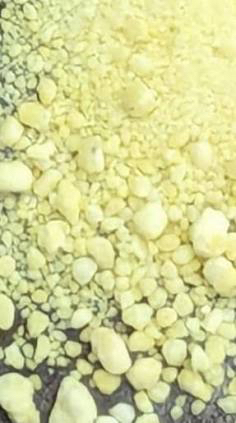
Light the charcoal. Sprinkle the sage. Negative energy go away. Today, I want to talk to you about a drug that is more dangerous than fentanyl. It’s called “Benzo Dope.” In my time working in the addiction field, one of the most dangerous combinations of drugs that I saw was benzodiazepines and opiates.

Benzodiazepines (Benzo) are a class of depressant drugs that are commonly used in anti-anxiety medications such as: Xanax, Valium, Ativan and Klonopin . There are many others but these mentioned are the most common. They are used in conjunction with many other drugs like heroin, cocaine and fentanyl to intensify the sedating effects. These drugs both decrease respirations and when combined can cause coma or death (dea.gov, 2025). Common street names associated with these drugs are: bars, footballs, french fries, ladders, tranks, planks, xannies, benzo blues, nerve pills, candy, k, k-pin, super valium (addictioncenter.com, 2025).

During my extensive time of being on psychiatry meds, I was prescribed “benzos” to help treat paralyzing anxiety. The trend that I’ve personally seen is that some doctors have significantly decreased prescribing these meds because of their high potential for abuse. The withdrawal symptoms, regardless if you abuse them or not, come with some pretty nasty symptoms. Even when being tapered down withdrawal effects are still present. Yep, I have abused those drugs a time or two with and without opiates.

“Benzo Dope” combines these two types of drugs raising the overdose rate in epic proportions. The “benzo” part of the concoction throws up some amnestic barriers where the user has no idea what has transpired. And oftentimes they don’t even know that benzos have been added to their dope. This leaves individuals susceptible to being robbed, raped and other traumas with no memory of the event. Now, however, “benzo dope” has become a staple in which addicts ask for it by name. The life saving drug, “Narcan,” helps to reverse the overdose effects of opiates but plays no part in the reversing the life cycle of benzodiazepines.

Several years ago, I worked at a methadone clinic in Albuquerque, NM. Methadone is another very dangerous drug that should be taken off the market. There were numerous overdoses because while using that strong opiate they combined benzos which resulted in death. As always, take what you need and leave the rest. No matter what drug is being used addiction is a death sentence.

“It is more difficult and dangerous to widraw people from benzodiazepines than from heroin.”

-Unknown

***Don’t forget to watch the video!***

#Thispuzzledlife
Did He Say Puberty?

“Other than dying, I think puberty is about as rough as it gets.”

-Rick Springfield

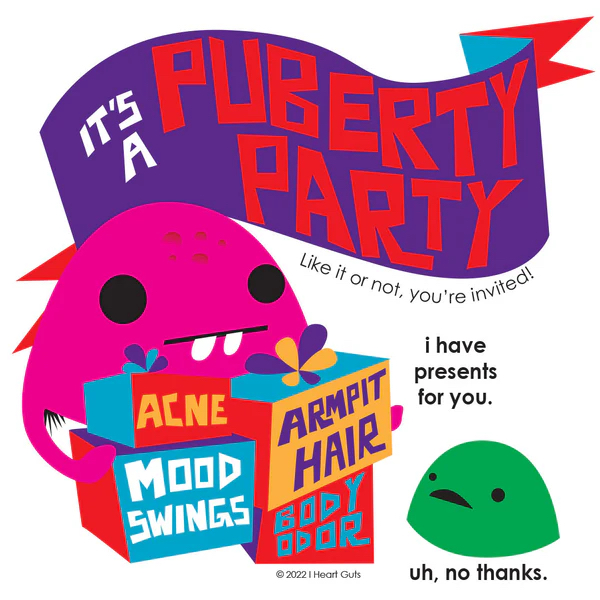
Light the charcoal. Sprinkle the sage. Negative energy go away. Okie dokie! Today, I want to talk about that horrible stage in life called PUBERTY! I know, I know. I feel like I just got acid dumped on me for saying that name. These days I have found the evil older sister called menopause. 

I personally don’t know how I got through puberty. I started understanding the confusion of being gay. The hormonal changes made me psycho. I began learning about relationships and how they change. I remember thinking that I took everything so personally. Horrible trauma was a constant. I became an addict in so many different ways. I was also incredibly impulsive. I don’t ever remember considering the consequences about anything. It was all about if “they” said no, DO IT! Little did I know, I would get permanently stuck in that developmental age. My body might’ve gotten older but I have not really aged emotionally. Trauma manages to stunt your emotional growth. And I was going through more than my fair share while my brain was still developing.

I was never taught boundaries growing up. I didn’t have any personal boundaries and perpetrators are boundaryless by nature. It was the perfect set up for things to go horribly wrong and they did. Our class went through so much trauma within about five years that we had to grow up incredibly fast. By the time I was a senior, I was emotionally searching for something that could provide me with some kind of hope. And that’s when my ex-husband made his predatory move. Many of us have become addicts in different ways. And sadly, many of my classmates have attempted suicide, completed suicide, died from drug overdoses or have gone to prison. It was so tumultuous, in fact, that I totally retract at the mention of the word.

As I have watched my oldest son, Marshall, go head first into that time period, I would be lying if I didn’t say how scared I am for him. The world is so much more violent. Bullying is much worse. Suicides and murders are out of control. School shootings are happening all over the country. Predators show even less restraint. Depending on where you live in the United States being free to express your sexuality can also be very traumatic. Pressure about having perfect grades and being accepted into top college programs has stolen the happiness of a child’s developmental process. And then there’s fentanyl that tops it all. I hate to sound like an old fart by saying that the world was just different then but it was. 

I think now there’s more emphasis on developmental mental health which is always a positive. Cell Phones have been able to record evidence of some of these covert things especially with abusive teachers. And finally these kids have the proof that administrators can’t blow off. But the shame and rejection by families and society doesn’t make life any easier. Perpetrators whether they be peers or adults still operate in the same way. Threats and intimidation is what keeps kids silent and in constant fear. And you put all of that onto a teen and they just can’t handle it. I have overheard people talking about suicide and the person said, “Sometimes life is just too damn hard for these kids.” I know my kids well and I pay attention to everything that I can while co-parenting with their other mom and her partner. We all have a very open type of relationship. However, it scares the absolute shit out of me, because most people thought that I was perfectly fine. And I was the farthest thing from that.

You can follow all the latest research and suggested ways of raising a child but they can still carry with them their own darkness even in plain sight. I would hope that my boys would come to me for anything. But the truth is, that may or may not happen and the consequences can be devastating. And if that’s not resolved in a healthy way then they carry that emotional weight into adulthood. It will be interesting 20 years from now to see the problems that these kids have as adults. Because the struggles that kids are facing now will resurface in some way.

I have laughed many times at the funny sides of puberty by watching my kids. Especially when little brother,Copeland, and his frustrations with Marshall. Sometimes it’s just plain hilarious. At 10 years old, he asks his own questions about puberty. I try to be mature about some of it but it’s a futile effort. Sometimes I laugh so hard that I can hardly breathe. Copeland loves to call his brother out anytime he gets the chance. Not to mention the fact that bathing is an evil necessity and seems to be the main thing that gets in the way of their happiness at this moment. Here is an example of a conversation that I witnessed one day:

Me:  “What’s that smell?”

Copeland: “Probably my brother.”

Marshall:  “Why did you say that?” 

Copeland: “Because it’s true! Momma Mel said that you stink and it’s a sign of puberty. Even if you don’t have hair on your balls yet.”

I made a quick stop to the bathroom because my bladder can’t handle as much laughter as it once did. Whew…I met it half way.  I had to laugh into a towel. 

I asked them:

Copeland: “Puberty and why he stinks.” 

Me: “What are y’all talking about?”

(I start giggling) 

I cannot seem to be mature about certain topics. And this was a stunning example.

Copeland: “Momma Mel says that you get hair everywhere.”

Me: “Yep one day you’ll have hairy tits, pits and a ball-fro on your cherries.” 

(We all laughed.)

Me: Now who wants the shower first? Nuts and butts!!! Let’s go!!!

At this time in my life, I do my best to still laugh at their innocence. We take one day and one argument at a time. I correct them when I need to . But I also let them have the freedom to say what they feel that they need to say within reason.  And I help them the best I can to deal with feelings. I also let them know that feelings are just feelings and they don’t last forever. So that when they’re almost fifty years old they don’t have to suffer with not ever knowing that the concept ever existed. So, maybe, just maybe, they can begin to understand that emotions aren’t terminal. And that all the power that they need is found from within themselves instead of in all the temptations on the outside that lead to even bigger problems.. And they won’t be forever stuck in an insufferable and totally self-obsessed hell.

“Raising teens is like nailing jello to a tree.”

-Unknown

***Don’t forget to watch the video!***

#Thispuzzledlife
What are the Streets Saying? “Pharm Parties”

“It’s not the use of drugs that causes the problem. It’s the abuse.”

-Patrick Betsch

Light the charcoal. Sprinkle the sage. Negative energy go away. Okie Dokie! I thought today that I would start by putting some information out there about some of the street drugs and other destructive things going on regarding addiction. Most have at one point in their lives done something incredibly stupid or dangerous in our teens. And I am no exception. I never learned my lesson and have continued to do so into my adult years.

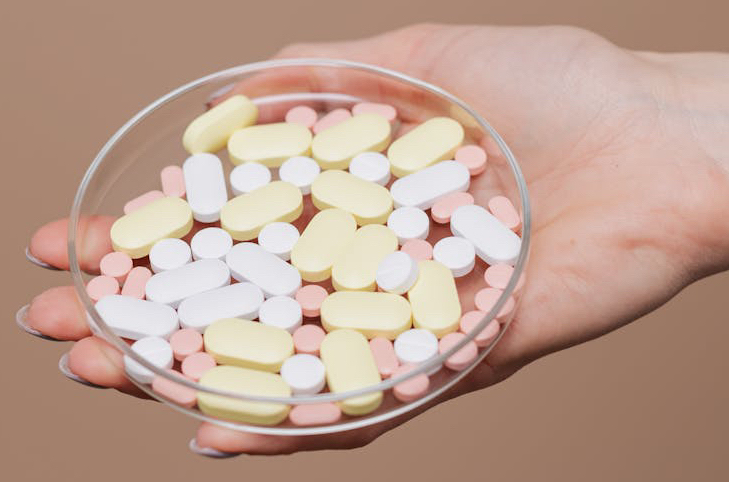
One of the more dangerous things I’ve heard of doing are parties known as “Pharm Parties” or “Skittles parties.” This refers to pharmaceuticals. These are baggies of pharmaceuticals that are gathered from parents’ medicine cabinets and dumped into a large bowl and taken at random. This activity has been going on since the 60’s which was known as “fruit salad parties,” which warned against the dangers in an Ann Landers column. At that time, the behavior was said to be out of rebellion directed towards parents. This was rumored by saying that the pills were being hidden inside fruit which were mixed into actual fruit salads. Individuals ended up in hospitals and comas as a result. However, now it’s commonly done due to addictive behaviors.  (Slate, 2008). “Pharm parties” are silent killers that are also known to combine alcohol with the random concoction. While mixing medication is still dangerous, it’s still not any safer than taking a handful of any other type of medication. I have never personally attended one of these types of parties. Because I was always getting high by my own stash of medications. Nevertheless, it’s all dangerous.

These “parties” also involve Robo-tripping, which refers to using the cough suppressant medications like Robotussin or the like with other alcohol or drinking large amounts of the product. There is not a lot of evidence that these parties are widespread. However the abuse of prescription drugs among adolescents and college-age students is widespread. In relation to street drugs like heroin, cocaine and ecstasy, prescription drugs such as Ritalin, Adderall, Oxycontin and Vicodin tend to be cheaper and seem to provide the user with a false sense of safety. The Centers for Disease Control and Prevention indicate that 55 percent of prescription drug abusers obtain prescription painkillers free from a friend or a relative, making it cheaper than purchasing a keg (Health.usnews.com, 2016.).

College parties have evolved from “keggers. And have now progressed to prescription drugs. Society now seems to normalize “popping pills” as a risky part of adolescent behavior. But what happens when this becomes an addiction? The goal of this post is to educate parents by teaching us to keep an eye on medicine cabinets. 

I will be writing more blogs related to topics about current trends regarding drugs and their misuse and abuse. Take what information you can use and leave the rest. But as I have said previously, the information is out there and ignorance can no longer be used as an excuse for behaviors that are taking the lives of ourselves and the ones we love.

“The abuse of prescription pills is a real thing. I understand that there are people that really need them and I understand that there are people that abuse them, and it’s just a gray line that unfortunately has to exist.”

-Channing Tatum

***Don’t forget to watch the video!***

#Thispuzzledlife