
Domestic Violence: Why Didn’t They Just Leave?

“Trauma Bonding is like being a hostage who has developed an irrational affection for your captor. They can abuse you, torture you, even threaten to kill you, and you’ll remain inexplicably and disturbingly loyal.”

– Ann Clendening.

I posted this today to help give you a voice to your own abuser/abusers. I have been in therapy for many years, and sometimes, I even doubt these words. The problem is that we were so indoctrinated with their beliefs, comments, gas lighting, manipulation, and co-dependency that we formed a something called “trauma bonding.”

Trauma Bonding is an unhealthy emotional attachment that develops between a victim and their abuser. It is a complex issue that occurs in different abusive situations that include physical, sexual, and emotional abuse. But it’s also important to note that not everyone who goes through abuse forms a trauma bond. However, some people may be more prone to forming a trauma bond due to the early experiences as a form of repetition compulsion https://www.attachement project.com, 2025). This can happen in domestic abuse, child abuse, elder abuse, exploitative employment, kidnapping or hostage-taking, human trafficking, and religious extremism or cults (https://medical newstoday.com, 2023).

Characteristics of Trauma Bonding:

·        Intermittent Reinforcement: The abuser cycles between periods of abuse and kindness creating a sense of hope and dependence in the victim. Victims of abuse may be waiting for that next “feel-good moment” in the relationship that also keeps them trapped in a cycle of abuse and relief (https://www.domesticshelters.org, 2021).

v  This is also how many addictions keep you stuck. If everything were bad all of the time, you would grow tired and leave. But the intermittent reinforcement is how they maintain control.

·        Isolation: The abuser often isolates the victim from their support system, making them more vulnerable and reliant on the abuser ((https://medical newstoday.com, 2023).

v  I was not completely isolated physically from my support systems. But emotionally I was very isolated. He constantly told me that my friends and family didn’t have my best interest at hand. He would make up lies about things they said and assassinate their character behind their backs.

·        Fear and Insecurity: The victim experiences constant fear and insecurity, leading them to believe that they cannot escape the abusive situation (https://www.savantcare.com,2023).

v  The constant fear and insecurity that I experienced was, in fact, my prison cell. And I was afraid to leave even when the door was wide open.

·        Justification: The victim may rationalize the abuser’s actions or blame themselves for the abuse (https://thriveworks.com, 2024).

v  I was conditioned to believe that everything I did that made him angry was my fault. And it wasn’t. Now, I can see that his actions were because of his behavior, not mine.

·        Emotional Manipulation: The abuser uses emotional manipulation to control the victim’s thoughts, feelings, and behaviors (https://wondermind.com, 2023).

v  This right here was the #1 key factor for why I wouldn’t leave. He even told me, “No other man would ever put up with the things that I have to deal with in you. All of the good things about you, which aren’t many, are because of me. You are useless without me. I have given you everything you wanted. And disobeying me is the thanks that I get? Why do you need anti-depressants when there is no reason that you should be depressed.

Consequences of Trauma Bonding:

·        Difficulty leaving the abusive relationship.

·        Feelings of guilt, shame, and self-blame.

·        Low self-esteem and trust issues.

·        Mental health problems, such as depression, anxiety, and PTSD (https://www.savantcare.com,2023).

Trauma bonding kept me trapped in an abusive situation. People have said, “Why didn’t you just leave?” The problem lies in the way they you manipulate you into believing that everything bad that happens, no matter how minor, is the victim’s fault. And day after day, their hold strengths without you even realizing it. And in my case, I felt as though I was responsible for their thoughts and feelings. I constantly strived to be “good enough” or “well deserving enough” to see the person that he told and showed me he could be when we met. And quite frankly, it was always just a game. Their abusive self is “the real them.” Believe your instincts and the colors in which they present themselves. For that is who they truly are.

If you have read through this and have never been in a situation where everything you do is being controlled, consider yourself lucky. But don’t you dare sit there and say, “It was their own fault that they didn’t leave.” That is one of the most callous things that you can say to someone who is currently trying to survive and those that have survived finally leaving that situation no matter how long it took.

You have absolutely no right to tell me or anyone else how we should feel simply because you have not experienced it. I stayed much longer than I should’ve. And there are times when I still beat myself up for it. Now though, I give myself some grace for not knowing how to leave or recognizing what was going on in plain sight. It’s not just one event that causes this. It’s something that happens every single day methodically planned and executed by the warden in the relationship.

Once you leave, I highly recommend getting into therapy. Just because you think that no damage has occurred, doesn’t mean that it hasn’t happened. Even now, 19 years later since I left him, I have phobias, anxiety, depression, difficulty concentrating, and difficulty making decisions. He has left a mark that will last a lifetime. And some of the things that he did I’ll never recover from. He once told me, “You’ll never be without me no matter what you do!” And the truth is that, while he still doesn’t have total control over me, I still allow parts of him to live rent free in my head.

The next post will be something that represents those of us who have managed to leave and have an understanding through therapy how and where to put the responsibility where it truly belongs, on them.

To those who are still in these types of relationships, I see you even when you don’t openly identify yourself. To those who have left and still live in fear, I see you and you’re not alone. To those of us who continue to strive to change those hard-core beliefs that were instilled by way of threats, intimidation, and violence, I see you as well. None of you are alone. And not all relationships are like this. 

Find a therapist that you trust and open your soul to them. Coach has been a lifeline of compassion and understanding for me that I’ve rarely experienced. And she has never made fun of or questioned why I didn’t leave. Unconditional support and her teachings have made life possible for me many lonely nights. I will probably always struggle with some things and that’s ok. This process is certainly a marathon instead of a sprint. And there is no time limit for healing. The whole point is to continue showing up and moving forward in whatever way that might take shape. You are not on an island like you think. There are millions of us both male and female who struggle with the effects and consequences of domestic violence and abuse.

You are loved. You are wanted. And you deserve the good things that life has to offer. Thanks for reading! And I hope you look for the next blog in a couple of days that I post that will help you begin to find your voice. The power to heal is now and ours.

Affirmation: My story has power and inspiration through it.

***Don’t forget to watch the video!***

 #Thispuzzledlife

National Domestic Violence Awareness Month

“Never stop fighting for your freedom, you are worth it.”

-DA Survivor-Anon

Light the charcoal. Sprinkle the sage. Negativity energy, go away. Today is the beginning of Domestic Violence Awareness Month. This month is when our voices from all over the globe will be heard. We as victims, survivors and warriors bring to light the horrors of domestic violence and the impact that it leaves on our lives and those around us. Let’s take time out for a little education on a few of the topics surrounding domestic violence.

Domestic Violence is a topic that I know a lot about. Well, I know how to function in it. And I know how to get away from it. But living with the aftereffects reveal a whole other set of problems. Where domestic violence used to be seen as something that only happens to women and their partners. There is more awareness on the abuse of men by their partners. No matter how you identify. It also happens to the most innocent, children and pets. This happens in all forms of relationships. And the statistics are staggering.

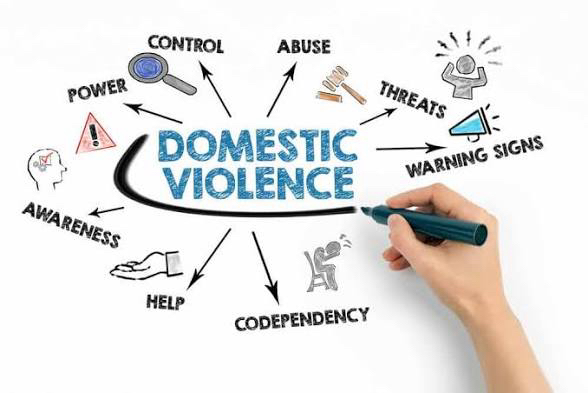
Domestic violence is violence committed by someone in the victim’s domestic circle. Which include partners and ex-partners, immediate family members, and other relatives and family friends (https://www.UN.org, 2025). The behaviors can include such things as:

·        Physical

·        Sexual

·        Emotional

·        Financial

·        Psychological actions or threats of actions that influence another person.

This includes any behavior that intimidate, manipulate, humiliate, isolate, frighten, terrorize, coerce, threaten, blame, hurt, injure, or wound someone. The repetitive exposure to violence teaches children that violence is a normal way of life (https://dvcc.delaware.gov, 2025). And for those of us who leave, constant confusion and every minute of no knowing when something else will happen again, is our normal. And the many years of programming by our abusers takes years of therapy to de-program ourselves. But you will never be who you used to be.

Recovery is not for the faint of heart. It is hard and uncomfortable. And it takes years to undo the damage that was caused on so many levels. I was one of the lucky ones. Long story short, I survived. But the mental damage that was caused has left me crippled in some ways. And through the sleepless nights filled with tears, therapy, psychiatric medications, body memories, flashbacks, phobias, and panic attacks, I have learned that I have a voice that deserves to be heard. And no matter what people say or believe, I can validate my own story regardless of the opinions of others. Because I lived it. 

The main thing I want to say to other women and men across the globe who are still in their own processes, “YOU ARE NOT ALONE!” Because it happened to me too. Thanks for reading! Keep smiling and pushing forward.

Affirmation: My light shines even in the dark.

***Don’t forget to watch the video!***

#Thispuzzledlife

SUICDE AWARENESS AND PREVENTION GROUPS PART 2

“I had gotten to the point where I was suicidal every day for six straight years…On that day, I made a choice. The choice to live, the choice to get better for me.”

-Justin

Light the charcoal. Sprinkle the sage. Negative energy, go away. Today, I want to tell you about a couple more suicide awareness and prevention groups. I wish I could cover them all. Unfortunately, there are just way too many. Please familiarize yourself and those you love and are affected.

Stop Soldier Suicide 

This is the only national nonprofit focused on solving the issue of suicide among U.S. veterans and service members. They have an aggressive goal of reducing the suicide rate by 40% by 2030. Veterans are at a 58% higher risk of suicide than those who haven’t served.

Other statistics about veteran suicide:

·       6,407 veteran suicides in 2022.

·       22 consecutive years with 6000+ veteran suicides.

·       140K+ veterans have died by suicide since 2001.

·       Second leading cause of death in veterans under age 45.

·       The rate of veteran firearm suicide has increased by 65%.

·       The suicide rate among veterans ages 18-34 has more than doubled.

·       Western states have experienced the greatest increase in veteran suicide rate, increasing by 55%.

·       31% Depending on branch, up to 31% of service members develop PTSD after returning from combat.

·       7x the rated of suicide for veterans in the LGBTQ+ community is up 7x higher that for non-LGBTQ+ veterans.

The organization’s impact on veteran suicide.

·       90%+ of our most at-risk clients completed a crisis response plan in 2023, giving them tools and resources to cope in moments of crisis.

·       73% of clients experienced a decrease in thoughts of suicide over the course of treatment.

·       92% of clients who were meaningfully engaged in our care showed some improvement in mental wellbeing by the end of treatment (www.stopsoldiersuicide.org, 2025).

The Trevor Project

The Trevor Project was founded in August 1998 by the creators, James Lecesne, Peggy Rajski, and Randy Stone, of the Academy Award-winning short film “Trevor.” The film was about a gay teen who attempted suicide. The filmmakers then established a crisis hotline for LGBTQ+ youth after realizing that there was not a resource available. They have since expanded services to include text and chat support and resources for parents, schools and others seeking support for LGBTQ+ support (https://obamawhitehouse.archives.gov, 2025).

Crisis Services: Providing counseling support services for LGBTQ+ young people 24/7 all year around.

Peer Support: Providing  an affirming international community for LGBTQ+ youth.

Advocacy: Working to change hearts, minds, and laws in support of LGBTQ+ lives.

Research: We conduct research studies to equip policymakers and other LGBTQ+ youth providing professionals.

The Mission

To end suicide among LGBTQ+ youth by providing crisis support, suicide prevention resources, and educational programs (www.thetrevorproject.org, 2025).

Thanks again for reading. The more education and resources we can provide each other with, the better the outcomes for us all. Please pass this information along to anyone who could benefit. I am one of those who suicide has affected my life in epic proportions. I am also one who continues to fight for understanding and compassion in a world that is lacking.

Affirmation: I am not alone, and others care about me.

***Don’t forget to watch the video!***

#Thispuzzledlife

LGBTQ+ And Suicide

“Our country is grappling with a youth mental health crisis, and it is particularly pronounced for LGBTQ+ youth.”

-Ronita Nath

 Light the charcoal. Sprinkle the sage. Negative energy, go away. Today, keeping in line with the topic of suicide, I want to discuss suicide in the LGBTQ+ community. 

The prevalence of suicide in the LGBTQ+ community is nothing new. The risk for suicide attempts and suicidal ideation can be 3 to 6 times greater for lesbian, gay and bisexual adults according to the National Institutes of Health. But there are also other statistics to keep in mind.

In 2024, 39% of LGBTQ+ youth considered attempting suicide according to The Trevor Project’s national survey. 1 in 10 of LGBTQ+ youth attempted suicide in the past year. And LGBTQ+ youth are more than four times likely to attempt compared to heterosexual youth. I can tell you that personally, I’ve been suicidal many times because of rejection from my family as a lesbian woman.

Transgender and Nonbinary identified individuals are at an even higher rate of suicide. And almost half seriously considered suicide in the past year. In 2022, 80% of transgender people had considered suicide and 40% had attempted. These statistics while staggering are not surprising. These demographic struggles are way more than they should be with little compassion from society.

Bisexual identified individuals are 1.5 times more likely to report thoughts and attempts compared to gay and lesbian individuals. And 2.98 times more likely to have  a suicide-related event compared to heterosexuals according to a 2022 study. And  the LGBTQ+ youth of color report higher rates of suicidal ideation and attempts compared to white peers (www.therevorproject.org, 2025). And there are several contributing factors such as:

·        Discrimination and Prejudice:discrimination, harassment and violence due to sexual orientation or gender identity increases the risk of suicide.

·        Lack of Support Systems: Limited social support from family, peers and community exacerbates the mental health challenges. 

·        Mental Health Disparities: LGBTQ+ individuals are more likely to experience depression and may face barriers to accessing mental health services (https://mhanational.org, 2025).

For someone who is a member of the LGBTQ+ community, I can tell you that I’ve considered suicide many times. The rejection from family and friends are sometimes more than I can bare. And having worked with someone in therapy many years ago, who was not sensitive to the needs of someone in these communities, there was little progress made. Mainly, because I couldn’t trust her. And she was extremely judgmental.

Since collaborating with coach for almost a decade, I can tell you that I have been able to fully accept the fact that I’m gay, despite my family’s disapproval. And then the religious communities also seem to greet us with bible verses telling how many ways we are going to hell. We all know that “choosing” to be gay is such an easier way of life. There the secret is out. 

With the current political administration taking away the rights and freedoms that the Stonewall riots stood against, and the lack of funding for suicide hotlines for LGBTQ+ youth, these rates will only climb. Our families, friends, churches, and government should be ashamed of standing by people who are ok with the policies set in place. We are the same as we ever were. We just wear rainbows now. 

There are those beautiful allies out there who remain the strength and backbone of our continual fight for equality. We are youth, parents, aunts, uncles, cousins, husband, and wives who just want to be recognized as equals in the eyes of the law. But where reputations and political agendas are from the far right, we must be even more solidified as a community. If someone is for rights with some and not others, I have no room for them in my life. But it’s taken me years to come to this conclusion. 

Is it lonely? At times, yes. However, I want people in my life who not only support me but also my friends. The suicide hotline is something that our community not only wants but needs. Many of us have non-supporting families and mine is no different. But I do have a place to live currently. But that does not constitute me putting up with homophobia or fragile masculinity and femininity.

The very few “true” friends I have, understand that being gay is not a “choice.” It’s who I am. And if that’s too much for someone to manage, that’s just too damn bad. To my fellow allies and community members, keep up the good fight. We must take up the original Pride flag are carry on. I love our colors. And I’m proud to call myself a member of the LGBTQ+ community.

Keep smiling. Keep shining. Knowing you can always count on me, for sure. That’s what friends are for. We are seen. And we are heard. And….WE ARE FABULOUS! Thanks for reading. Take what you can use and leave the rest.

Affirmation: I am proud of myself and will continue to strive to do well.

***Don’t forget to watch the video!***

#Thispuzzledlife

Common Myths About Suicide

“When you feel like giving up, just remember why you held on for so long.”

-Hayley Williams

Light the charcoal. Sprinkle the sage. Negative energy go away. Today, I want to talk about some myths regarding the topic of suicide. I was first exposed to suicide at the age of thirteen. One of my friends and classmate committed suicide when we were in the eighth grade. As a child, how do you manage that? I can tell you that among all of the major events in my life that has changed me in some way, the day that I lost my friend to suicide will always rank high on my list. I think, though, that the biggest impact for me was how our teachers and school administrators dealt with the situation.

I grew up in the 1980’s when child and adolescent mental health was rarely recognized. And, honestly, my generation was sort of left with the attitude of “figure it out yourself.” Situations that left gaping wounds were merely glossed over. And so, me and other friends and classmates turned to a life of addiction and suicide. As a teen who was being abused daily by a teacher, and the complete lack of protection from the adults, I was forced to just “figure it out.” I did it in total “self-preservation mode.” The behaviors that I developed were not healthy, but they were there when no one else was.

In the 35 years since my friend’s suicide, I have lost a lot more friends. And sadly, I have built walls all throughout my life that continue to help me through my pain. The one thing that has seemed to resonate through the years is how religion constantly attacks those who have been through the most. And I grew up being marinated in the ideology that suicide was “selfish,” “a sin,” “immediate condemnation to hell,” “the easy way out” and the most “self-centered” act known to man. 

A lot of the “indoctrinating messages” I was raised to believe, life made me realize how very untrue and damaging they are and will continue to be. I have been on all sides of suicide. And from a personal standpoint, those beliefs couldn’t be any farther from the truth. Below are a few common myths regarding suicide.

Myth 1: Talking about suicide increases the chance a person will act on it.

Fact: Talking about suicide can reduce rather than increase suicidal ideations. It improves mental health related outcomes and increases the likelihood that someone will seek treatment.

Myth 2: People who talk about suicide are just seeking attention.

Fact: People that die from suicide have often told someone about not wanting to live anymore. And it’s always important to take it seriously. In my own family, these statements have rung true. Or most often, those statements are ignored.

Myth 3: Suicide can’t be prevented.

Fact: Suicide is preventable but unpredictable. Most people have experienced intense emotional pain, hopelessness and a negative view on life and the future. Suicide is a product of genes, mental illnesses and environmental risk factors. Intervention can and does save lives.

Myth 4: People who take their own lives are selfish, cowardly or weak.

Fact: People don’t die of suicide by choice. The emotional pain that they experience makes it difficult to consider different views. Have you ever turned a gun on yourself? I have.

Myth 5: Teenagers and college students are the most at risk of suicide.

Fact: Suicide rates for that age group is below the national average. The age groups with the highest rate of suicide in the U.S. are women 45-64 and men 75 and older. Suicide is a problem among all ages and groups.

Myth 6: Barriers on bridges, safe firearm storage and other actions that reduce access to lethal methods of suicide don’t work.

Fact: Limiting access to lethal means of harm is one of the most straightforward strategies to decrease the chances of suicide.

Myth 7: Suicide always occurs without warning. 

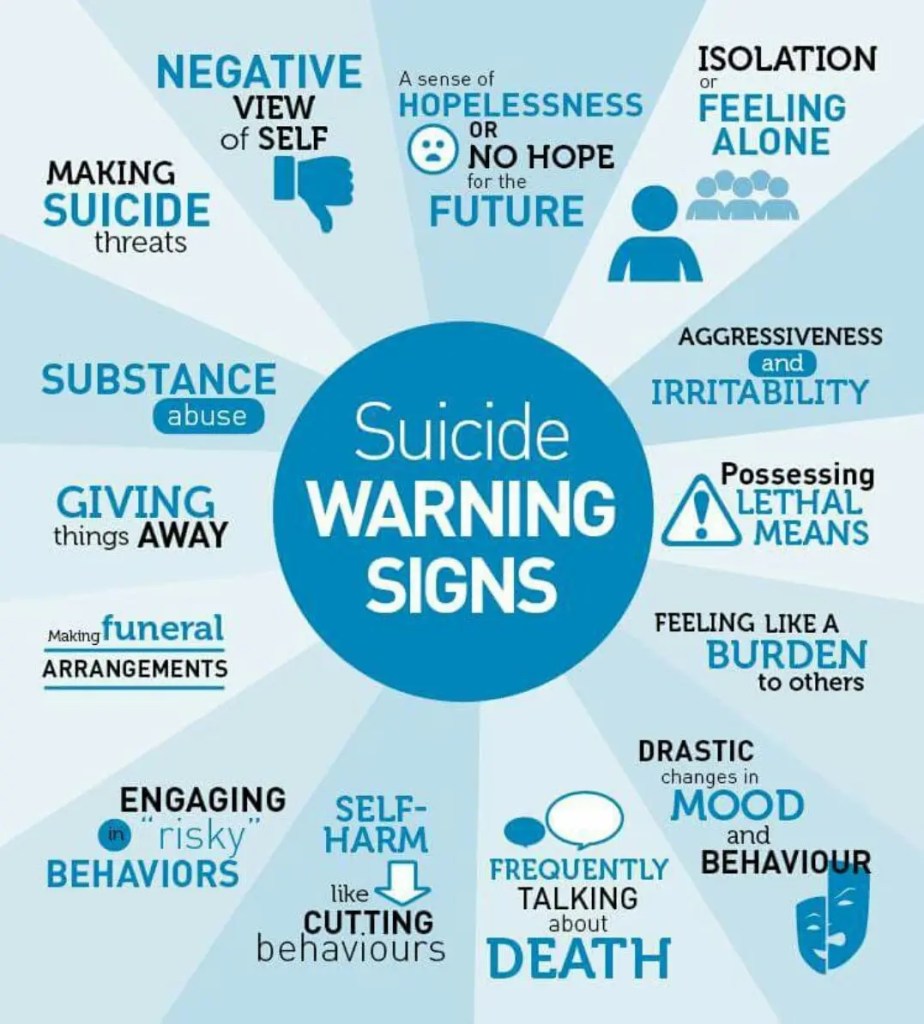
Fact: There are almost always warning signs before a suicide attempt.

Myth 8: Talk therapy and medications don’t work.

Fact: Treatment can and does work. I don’t agree with big pharma for many reasons. I guess, though, “life over limb.” Lives are saved with both therapy and medication. Therapy has saved my life for many years now. But finding the right one to work with can be taxing. Most people who are in the helping profession do help rather than harm (mayoclinichealthsystem.org, 2025).

Myth 9: You have to be mentally ill to think about suicide.

Fact: 1 in 5 people have thought about suicide at some time in their life. Not all people who die by suicide have mental illnesses at the time they die.

Myth 10: People who are suicidal want to die.

Fact: The majority of people feeling suicidal do not actually want to die; they just want the situation they’re in or the way they’re feeling to stop.

Myth 11: Most suicides happen in the winter months.

Fact: Suicide is complex and not just related to seasons or the climate. Suicide is more common in the spring and a noticeable peak on New Year’s Day.

Myth 12: You can’t ask someone if they’re suicidal.

Fact: Evidence shows that asking someone if they’re  suicidal could protect them (Samaritans.org, 2025).

Myth 13: Strong faith prevents suicidal thoughts.

Fact: Many deeply religious figures including biblical figures have experienced suicidal thoughts. The misconception that strong faith eradicates mental despair is false. Faith doesn’t guarantee protection from difficult emotions and struggles.

Myth 14: Suicide indicates a lack or abandonment of faith.

Fact: Suicidal ideation is viewed from different perspectives. Suicide does not inherently mean that someone has abandoned their faith.

Myth 15: Fear of religious repercussions is a sufficient deterrent for suicide.

Fact: For some maybe the fear of divine punishment can be a factor. However, many faith communities emphasize grace and forgiveness, even for those who die by suicide. And personally, I have rarely seen grace and forgiveness on this topic.

Myth 16: Religion or faith alone is enough to prevent suicide.

Fact: Studies show inconsistent findings regarding the protective effect of religious affiliation on suicide risk. It is crucial to understand that faith alone is not a guarantee against suicide and should not replace professional mental health interventions when needed (https://pmc.ncbi.nim.nih.gov, 2025).

I hope at the very least that some of the myths regarding suicide have been explained. My own personal suicidal feelings have been dismissed the majority of my life. And no amount of “bible beating” has ever helped. It has only made things much worse than they already are. And some of the statements made disguised as “help” by family members, are not help. The statements are just toxic. Saying that you have “x” amount of years living and never considered suicide isn’t helpful. Please don’t play therapist when you’re not one.

Put harmful judgments in the trash where they belong. Love and appreciate those that you love. Because it can all change in an instant. Quit making “their” suicidal feelings about “you.” Because it’s not. And always remember, “Just because someone has a smile on their face doesn’t mean that they’re not suicidal.” Thanks for reading! As always, take what you can use and leave the rest.

Affirmation: I am overcoming depression one step at a time.

***Don’t forget to watch the video!***

#Thispuzzledlife

Suicide Awareness And Prevention Month

“This life. This night. Your story. Your hope. It matters. All of it matters.”

-Jamie Tworkowski

Light the charcoal. Sprinkle the sage. Negative energy go away. Thank God, we have made it through most of the hottest months of the year. September is another sticky, humidity filled month before the beginning of the cool down. September is also Suicide Awareness and Prevention Month. I know, it’s another upbeat topic. I think that the topic of suicide shouldn’t be taboo. It’s an unfortunate dark part of nearly every culture. And, yes, it has also affected my life in many ways which I’ll share.

Suicide has always been referred to as “the easy way out,” “selfish action,” a  “total disregard for friends and family,” and the most hurtful “a sin.” And it’s really easy for people to throw out opinions that help no one when they are struggling. That is minimizing their pain and abuse.

Having been not only a patient in the mental health system for the majority of my life, and working in the mental health field as a professional, I have also seen and been on most sides of this problem. People are so quick to judge what they don’t understand. And, sadly, suicide is a topic that tends to be discussed in judgment versus with compassion.

I have been chronically suicidal since I was a teenager. I was being abused and put on display for others to see for an entire year in school. I was also locked in a closet in that same room while being verbally abused in any way imaginable. I tried to tell adults about what was going on. However, I was made to feel like it was my fault. This helped the teacher to further perpetrate her abuse. My parents also made me apologize to her for comments that I made to her. But as their child, I was not protected by them or the administration. I was in a difficult situation without the possibility of brighter days ahead for the future.

My suicidal feelings got the best of me one day at school when I took forty aspirin. I had no idea, at that time, that it wouldn’t work. But the thought of continuing one more day at the hands and mouth of s purely evil woman was more than I could deal with. My parents were called and made aware. Nothing was ever done. I was never provided with any kind of help. Maybe it was the “standard” of the late 1980s. I was not given the emotional support to sort out my trauma. 

What I did begin doing was self-harm. I had no idea what it all meant, at that time. But I knew that it made things better even if for just the moment. As I’ve stated about my family’s dysfunctional dynamics, I was told just to make it through the year and everything would be fine. It wasn’t. Yes, the abuse ended. But I was not fine.

By my freshman year in high school, I was “balls to the wall” in addiction. Addiction that presented itself in drugs, alcohol, eating disorders and self-harm. The strongest addiction being self-harm. And 35 years later, it continues.

The depression, anxiety and suicidal ideations never subsided as I was told. One day I finally told my mother that had I had access to a weapon, I was going to kill myself. Instead of offering help, of any kind, I was met with anger and told that I was being selfish. My thoughts were anything but selfish. I was hurting in ways that no one knew. And no one seemed to care. So, I suffered in silence for many years.

As a child/teenager when traumatic events occur, your mind goes directly to self-preservation. You do whatever you can to either tolerate the darkness or end the pain. Meanwhile, the trauma of life continued at a level that no one is capable of dealing with alone. My next real relationship was abuse that lasted 14 years. And again, I felt trapped.

If you don’t understand the concept of Pavlov’s dogs, then you don’t understand what it’s like to be held mentally captive while the world sees your situation with an easy out. And the sad part about it, is that they think that you deserve everything you get because you don’t just leave. My parents attributed all of the chaos of that relationship as being something that religion could fix. So, we got involved in church. If anything, the abuse got much worse because now his weapon was a Bible that he read and used as justification that I should be “submissive” to his every demands. Mentally, I was trapped again without any way out. And my self-harm was not about survival. It was about making the pain end. 

I would reach a mental breaking point and would stand out in the front yard where we lived and pointed a gun at my chest and pulled the trigger. The strange part was that I seemed to be witnessing rather than taking an active role. I watched that whole event as a spectator. I don’t expect you to understand the power of dissociation. Most people, in fact, are very ignorant about it. Again, I was met with anger from my mother. She kept saying, “Hush! Hush! Do you want to go back to Pine Grove?” That is the local mental health facility. And at that moment all I needed was compassion. But again, I faced anger and judgment. I wasn’t trying to “take the easy way out” or be “selfish.” I just wanted the pain to end. And everyone seemed to lose sight of that reality but me.

The bullet went into my shoulder only a few inches from my heart. And even hospital staff treated me as though I was taking up space much better suited for someone else. Self-harm became a way of life for me. It’s been there when people should’ve been there. But self-harm doesn’t always mean “suicide attempt.”  And this is a very sore subject among family members. But I sit as an outcast by my family who want nothing more than the family name to not be tainted by abnormality. They acknowledge that bad things happen. But they just want it to disappear and to quit bringing shame to the family name and instead just move on with life. But the biggest factor, is that they don’t want to be perceived as “parental failures.” It’s still all about the reputation of the family.

 People that is not how trauma works. And saying, “We just didn’t know how to help you” is “shit”of an excuse. I was a child when it began. You were in the position to help protect your daughter and you didn’t. Remember, the part of the story where I said, “Just make it out of the 8th grade and everything will be better.” It’s 35 years later and it’s not better. It has crippled me as an adult. And has stolen my hopes and dreams. And I still deal with suicidal ideations on a daily basis. Those never went away either. So, I guess feeling like a “burden” to those who say that they love me but treat me as such will forever be the unhealthy narrative. I’ve asked them to do therapy to help with our relationship. But again, it’s of no importance. And the unspoken belief that I’m unworthy continues.

I wrote this blog to say this, “Quit making someone’s struggle with suicidal thoughts and actions be all about you. You are not helping anything. You only make it worse.” Simply say to them, “Your thoughts and beliefs are valid. Let’s find some compassionate help that will help you thrive. Throwing Bible verses in their face is not helpful. Telling them that they will go to hell is not helpful. They are already living in an emotional hell. 

This is not rocket science! Just don’t be an asshole as a rule of thumb. I have been in the position of being the last one to talk to a person moments before they completed suicide. I can tell you this, “I’m not mad at that person. I don’t condemn their actions. I don’t say, “Well I guess they’re in hell now. How selfish of them.” I simply say, “I hate that they were in so much pain that nothing anyone said could break through the cloud of despair.”

Until you’ve been in that position, you have no idea how strong emotions and thoughts are. And if the person felt like they had exhausted all of their means of trying to end the pain in an acceptable fashion, then they see no other way out. Judgmental comments about, “well, they didn’t seek out every source of help” is you seeing in from your perspective only. If you can’t see it from their perspective, you’re one of the lucky ones. Thanks for reading! Take what you can use and leave the rest.

Affirmation: I’m always healing and never alone.

***Don’t forget to watch the video!***

#Thispuzzledlife

What Are Your Family Dynamics? 

“In every conceivable manner, the family is a link to our past, bridge to our future.”

-Alex Haley

 Light the charcoal. Sprinkle the sage. Negative energy go away. Today, I want to talk about something personal, our families. I know. It makes my skin crawl as well. Part of the “icky” feeling we get when we discuss our families is because we know, in some unique way, we have a dysfunctional family. And we are also taught, especially in the south, to keep family business within the family. This includes race, gender and sexuality. And if it’s not what the family allows, sometimes for generations, it’s all to be kept secret. But what does that accomplish?

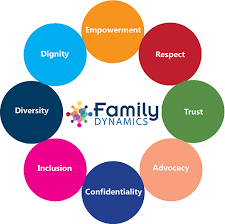
Let us first look at what family dynamics are. They are composed of behavioral and relational patterns that determine how members interact with each other and in society. And these patterns are passed down through generations. Family dynamics can be healthy or unhealthy. And they also largely influence someone’s self-perception, relationships and well-being (mywellbreing.com, 2025).

Three examples of family dynamics are Healthy, Dysfunctional and Toxic.

Healthy Family Dynamics: This is where there is open communication, mutual respect, clear boundaries, honesty about feelings healthy and supportive environment for growth . And I would venture to say that most families don’t fit into this category.

Dysfunctional Family Dynamics: This involves poor communication, lack of boundaries, unhealthy behaviors, and emotional neglect (psychologytoday.com, 2025). This is where my family seems to fit like a glove.

Toxic Family Dynamics: This includes controlling behaviors, abuse, neglect or addiction and can significantly harm the well-being of family members (therapygroupdc.com, 2024). And sadly, my family fits in nicely with some of this category also.

 I will go much more in-depth in this blog series about family dynamics. My own family doesn’t even come close to fitting into “healthy” family dynamics. Also, over generations the behaviors passed down will change in some way. Families think that “their” way is the only way. And overtime that has been the accepted way of thinking. But does that foster growth? Growth will never be fostered in family relationships if those types of criteria are not met. And having “perceived” healthy relationships among three out of four members of a family is NOT “Healthy Family Dynamics.”

I don’t know what is so difficult for people to understand about this. But when “dysfunction” is accepted as the new “healthy” it is only a matter of time before the breakdown in the family unit begins to happen. And this being allowed to go on for years, can create bitterness, resentment, fear, loss and chaos. Even at this point, families like my own, refuse to acknowledge the hurtful tactics used as a way of functioning and breed only toxicity. This will eventually breakdown the family until there is nothing that can be repaired.

Stay tuned as I dive even deeper into family dynamics and how we function. As always, take what you can use and leave the rest. Stay safe. Keep Smiling. And Keep Moving Forward!

Affirmation: I am worthy of love and respect, even when faced with difficult family dynamics.

***Don’t forget to watch the video!***

#Thispuzzledlife

What Is Narcissism? Part 2

“The Narcissist wants the authority of a king while having the accountability of a toddler.”

-Haryo Aswicahyono

My ex-husband and his brother are both very narcissistic in the way that they manage everything. They are not men. They are boys with very fragile egos that were destroyed by their father. Nothing they ever did was good enough for him. And his explosive anger was the way that he maintained control.

Their was also raised by narcissistic uncles that taught him the only way to raise kids is to beat them into submission. That is also how his grown children operate. If they don’t get what they want, they abuse their victim until submission is achieved. And my ex-husband was that way in every area of his life. Because physically they’re both just broken-down old men who use threats and intimidation. Because they would get beaten physically in a fight. 

Where was their mother? Well, she was an uneducated homemaker for many years. And where was she to go or to do? Her circumstances didn’t allow her to take three children and leave. The services were just not available then. But what it caused was continuous trauma to others. If someone doesn’t put a stop to it then the abuse continues to multiply like cancer until it becomes the norm. Then, they become accustomed to what is now their normal life and anyone who challenges that must pay in whatever way they see fit. 

I finally got enough and left. But his brother’s wife continues to take emotional abuse. I went into my next relationship and the mark of his abuse also crept in. I decided that I was where the effects of his abuse would cease to continue. And it’s been an arduous process the last twenty or so years in therapy. The way I got though life was so distorted once I was able to step back and realize all the damage that he caused. The most difficult part of living through it is that the PTSD that I sustained from his emotional, financial, sexual and religious abuse continues to affect me today. And sometimes the simplest of things are monumental. 

I’m one person who has been through this. And there are millions more people, both men, women and children who are subjected to a malignant narcissist like I was. Will everyone get help that can be so beneficial? Absolutely not. And then the cycle will continue for another generation that are busy building more narcissists. 

Oh, the kids can grow up to be successful in spite of the narcissism. Just look at our president. He oozes with narcissism, and he has a cult of followers who don’t see it either. It is all about his personal gain that is disguised as “Making America Great Again.” Those of us who have been abused by a narcissist can identify the “gas lighting” and “manipulation” a hundred miles away. Because some of the same statements and attitudes came out of my ex-husband’s mouth. 

Narcissists rarely get help because they never see fault in themselves. They are great at dishing it out. But they absolutely cannot handle it being done to them. He very much wanted to be seen as some kind of a “big boy.” However, he had the emotional maturity of a toaster. My sons are already better men at 10 and 13 years old than he is at 68 years old.

So, I ask you, “How do I support someone like that? I’ve already been through its multiple times in my life. And if you really want to find out the total damage that has been caused to me by way of the narcissists in my life, I’ll let you talk to my therapist who continues to see me struggle years later.”  Thanks for reading! Stay educated. Stay safe. And keep smiling!

Affirmation: I resolve to walk away from situations where someone lies, refusing to engage with truth benders or gas lighters.

***Don’t forget to watch the video!***

#Thispuzzledlife

Mommy Dearest Part 2

“This is how betrayal starts…not with big lies, but with small secrets.”

-Shalini Joshi

Now let’s continue…

Lisa did update us on Kathleen’s self-harm issue that had begun to dissipate. And now she was also in therapy. I always asked about how the therapy was going because I hadn’t left my abusive therapist yet. So, I became very protective when it came to that topic. She would always put my fears to rest by telling me that she had a great therapist that really knew how to work with Kathleen. 

Landri would also have a big scare with her heart that left her almost completely bed bound. She had become so weak that she could no longer support her own weight. But eventually she would regain her strength. Slowly but surely, she wasn’t so pale. She was beginning to put on weight, and it looked really good on her. And then she started getting out and walking. They had moved onto the same military base as us. They lived only about 6-7 houses down the street.

We had not been around them in a little while due to our own issues with my mental health. And I had already begun living life in solitude where I would remain for the next few years. One day I had gone out to check the mail when I saw someone walking towards me on the sidewalk. I soon realized that it was Landri. I spoke to her and told her how good she looked and how happy I was for her. We made a very superficial conversation because I was in a very deep depression at the time. The following is the last conversation that she and I would have together. And it continues to haunt me to this day.

 Landri: “Dana, I’m scared of Lisa.”

Me: “What do you mean you’re scared?”

Landri: “I don’t really want to go into our personal problems, but she’s become very aggressive.”

Me: “Wait! Do I need to throw some aggression her way?”

Landri: “No, that would just make it worse. Just remember what I’m telling you.”

Me: “Ok. Promise me that if you need us you will call.”

Landri: “No, it’s nothing like that. She’s just spent all of our money on drugs. And she doesn’t like me questioning her about any of it.”

Me: “Ok. Well, we are here to help if you need us.”

Landri: “Thank you so much for being such good friends.”

She had convinced me enough to pacify my obsessive nature when someone is being dominated. I also understood how telling someone about a perpetrator can make the situation worse. And coming from a domestic violence situation I felt that fear for her. Later that day when Mel got home from work, I told her about the situation. She was likewise just as perplexed as I was. I told her everything from beginning to end about our encounter. She agreed with me to stay out of the situation. And to just be available if necessary. 

A week later, Landri was dead. She apparently died in her sleep. But now that conversation that was stuck on replay was never-ending. I didn’t know what to do as the news completely stunned me. I told her to find out funeral arrangements. I couldn’t let the thought go that, “Lisa just murdered one of our closest friends.” I would battle in my mind thinking, “That’s absurd to think that we would be as close to a situation that was that dangerous and not know something was wrong.” And it has always been rebuttaled with the very conversation that we had asking me not to get involved.

Mel came in from work a few days later and said, “You’re not going to believe what I’m about to tell you.” I said, “Ok well that’s not a good sign.” She very begrudgingly said, “Lisa has already had her cremated.” I scream, “WTF?!” And I began shaking. It was then that I realized that there was a high likelihood that Landri was murdered. It was difficult for me to look Lisa in the face the next time we saw her. Mel asked, “Lisa, what happened?” She begins telling us the story that she had become very weak, very quickly. And how they were laying in their bed together and they both took a nap. But when Lisa woke up, Landri was dead. I told her, “I just saw Landri several days ago and she looked the best I’ve ever seen her.”  Lisa said, “Yea the doctors said that sudden death was a possibility.” I didn’t tell her what Landri herself told me. And without warning Lisa and Kathleen moved away and weren’t answering us in any way.

We had gone to the local library where we were known frequently. Mel tapped me on the shoulder and said, “Look who’s here.” I turned around and I must’ve turned white. We saw Lisa and Kathleen before they saw us. Kathleen wasn’t in a wheelchair. But when we made eye contact, we saw Lisa mumble something to Kathleen. She was just super excited to see us. And then her demeanor turned very solemn.

That situation was many years back now. Mel and the boys moved back to Mississippi. And I moved to Texas to work with “coach” on my PTSD issues. While living out there Mel called me one day and said, “You’ll never guess who I talked to.” Agreeing with her I said, “Probably not. What’s up?” Me said, “I just got off the phone with Kathleen.” I said, “Shut up! What’s going on with her?” Mel told me, “Well, she said that Lisa had made everything up about her military and EMT service. And that neither Kathleen nor Landri had a terminal condition. She was starving them. That’s why Kathleen passed out so much and broke bones. Lisa is now homeless. And Kathleen has moved on with her life complete with therapy.” It took me a few minutes to respond because those horrible gut feelings began flooding every part of me. Several years had gone by since that horrible situation but it still stung with great ferocity. I told Mel, “You know it’s bothered me ever since about that we seemed to know the truth. If it doesn’t seem right, it probably isn’t right.” She said, “Yea, but what proof did we have at the point when we thought that? We couldn’t just go into the police station and talk to a detective only to say, “Well we don’t have evidence, but I do have a gut feeling. They couldn’t exhume the body because it was cremated.” And the words that my ex-husband repeatedly said to me, “Nobody will believe you. You’re the one with the mental problems” kept me silent once again.

Nothing has ever been proven or investigated related to that situation. One of the many things that has continued to plague my mind is the fact that we left our oldest baby in their care so that we could actually go on a much-needed date. They baby sat Marshall many, many times. If something had happened to him, I would’ve killed her without a second thought. Some of my “mommy guilt” about being a parent holds space for the event that taught me that evil is still alive and well in this world. I don’t wish her death. But I do wish her a miserable existence until the end of time. She didn’t care about our child or our family. But what was the saddest was that she didn’t  care about her own family. 

At the same time, I was dealing with another “friend” who was also very manipulative. And I was also being abused by my therapist. After all of this, I lost my damn mind. The first thing I remember writing about this was the poem titled Silent Screams. The only way that I get through another day with the constant barrage of memories about this situation is to give myself grace in the fact that everything was so hidden in a tangled web of lies. She was a manipulator that was even more skilled than my ex-husband. I think that my anger around this is about the fear that I experienced after realizing how much time Marshall had spent in their care. There is a certain amount of grief that comes from losing those relationships. We lost what we thought “was” instead of what it “wasn’t. 

Munchausen by Proxy is actually pretty rare. Unless,of course, it’s happening to you. I recently got interested in the case of Gypsy Rose. She was also at the mercy of her mother who had Munchausen by Proxy. Except that Gypsy Rose murdered her mom and subsequently went to prison. She served her time and is now out of prison. She has talked about all of the unnecessary treatments and procedures that she had to go through for absolutely no reason. And so did Kathleen. 

I don’t advocate murder. However, through the many years of trauma at the hands of some truly evil people, I can’t totally understand the rationale. Lisa was still allowed to live her life. She has nothing but one tooth and her lies that are continuing to be spread onto other unsuspecting victims. The thoughts and feelings that have stayed with me since that day are forever in my mind.” Again, it’s just another traumatic event that has taught me to question everyone’s motives including friends and especially family. I’ve never thought that I should require proof of terminal illness or military service. But maybe I should.

“But the memories that hang heaviest are the easiest to recall. They hold in their creases the ability to change one’s life, organically, forever. Even when you shake them out, they’ve left permanent wrinkles in the fabric of your soul.”

-Julie Gregory

Affirmation: “I am strong and can overcome the influence of manipulative individuals.”

***Don’t forget to watch the video!***

#Thispuzzledlife

Mommy Dearest

“Munchausen by Proxy may be the single most complex and lethal form of maltreatment known today.”

-Julie Gregory, Sickened: The True Story of a Lost Childhood 

Light the charcoal. Sprinkle the sage. Negative energy go away. Today, I want to talk to you about a serious mental health disorder known as Munchausen Syndrome. I know that this is a topic that a lot of people like to sweep under the rug because it just seems too grotesque and unimaginable to talk about. However, the fact is that the disorder remains alive and well in some individuals. And the signs and symptoms are hidden in plain sight.

Munchausen and Munchausen by Proxy fit under the diagnostic criteria for Factitious Disorder. A Factitious disorder is a conscious and intentional feigning or production of symptoms due to a psychological need to take on the sick role in order to obtain an emotional gain. This is not to be mistaken with Hypochondriasis. Which is an obsession with fears that one has a serious, undiagnosed disease. The symptoms are not created consciously (nih.gov, 2006).

Munchausen Syndrome is still considered to  be the most extreme form of factitious disorder. They intentionally deceive others by pretending to be sick. They fake symptoms or make symptoms seem worse than they actually are. And speaking to them you would think that they are an endless pit of medical knowledge. What they do is produce some medical or psychological problems and study everything they can find on it until they’re comfortably able to construct an ongoing story.

Munchausen by Proxy is where the behavior is imposed onto another person. The biggest factor in keeping their narratives alive is manipulation. And they are exceptionally good at it. My exposure to Munchausen by Proxy has left me with a lot of shame, guilt, regret and suicidal ideations. I have tried to extend myself “grace” about this situation knowing that had I understood the harsh reality sooner, I could’ve done something about it.

When we moved to Albuquerque, NM we found us a lesbian group that became our home for a short while. Mel and I had dreams and aspirations of being parents one day which eventually distanced us from them. But not before we met Lisa, Landri and Kathleen. “Two moms and a child? We’ve totally got to meet them!” I told Mel. It didn’t take us long to realize that we had more in common with this family than realized. Lisa, who was clearly a “top” and the strong family leader, told us that they were from Laurel, MS. Very surprise I said, “Wait What?! You mean to tell us that we just met people from Laurel, MS  that are a lesbian family?” She confirmed again. I thought, “Holy Crap, this is what we’ve been needing. Someone from the south that understands our frustrations.” Our relationship was soon off to the races.

Their daughter was a truly compassionate being who appeared reserved but loved our son, Marshall. And Marshall loved them all. And Kathleen definitely danced to the beat of her own drum. The connection was so close that it appeared that this was a friendship that would last a lifetime. Lisa told us that she was a retired military colonel. She was always dressed in some type of military get-up. And she had also been an EMT and worked on an ambulance. I was happy that I now had someone to exchange “trauma junkie” stories with. She seemed to deal with it better than I was doing and was interested in how she did it. Her partner, Landri, was very frail looking but spicy in her own sense. She quit working due to her chronic health issues regarding cardiac problems. They told us that their daughter, Kathleen, had been diagnosed as a child with a terminal heart condition. And that she likely would not make it to adulthood. They warned that there were very frequent hospital visits sometimes close to being fatal. But we loved all of them and they loved us.

 We were prepared to love and accept them right where they presented themselves. We never knew that we needed to have someone prove their medical conditions or a traumatic past. We were on the “therapy” side of life which fit comfortably with our level of empathy. And for the first time while living in Albuquerque there were people who understood what it was like to grow up and come out in the south.

Since we lived on a guarded military base, when she would come through the gate dressed in some type of military attire she accepted the salutes as a proud retired colonel. We planned to celebrate the next Thanksgiving together in grand southern style. Mel and I spent several hours in the kitchen cooking our favorite southern dishes. The finished product was a full spread that would make our ancestors smile. But right before they came over Lisa called to ask us if we could make Kathleen some macaroni and cheese because she didn’t eat regular Thanksgiving foods. We both thought that was strange. But we didn’t question anything due to possible nutritional needs. 

When they arrived, Kathleen came running into our house. She grabbed the freezer door and swung it open while asking, “What have you got to eat?” I looked at Mel like, “Are you watching this?” Shocked and completely bewildered I very clearly remember thinking, “For someone who was raised in the south, that behavior was considered very disrespectful.” We gave the cooked macaroni to her after she also went to the pantry looking for something to eat. Her behavior was startling. She grabbed the macaroni and went and ate like she hadn’t eaten before. Mel and I spoke about it later and we felt half angry and half in utter disbelief. But I also noticed that Lisa was trying to ignore the “elephant in the room.” Almost as though the behavior was unexpected. That evening went on without any other noticeable issues.

Being a preemie, Mashall had  different nutritional needs than a normal baby. He drank pediasure to supplement his much-needed calories. Lisa stated that Landi was supposed to be on supplemental drinks like that for adults, but they couldn’t afford it. We gave them a few drinks which they greatly appreciated. But soon they wanted the majority of what we were receiving for Marshall through the CHIPS program. So, we had to put a stop to that. Again, the whole situation wasn’t sitting right with us. However, there were no alarm bells just a “that’s odd” moment.

Kathleen was  admitted many times to the hospital for injuries that were sustained by passing out. She would literally break bones when she fell. Lisa always explained that it was due to her congenital heart problem. And honestly, we have been close friends for a while now while these medical issues continued. We were also told that they were in a support group for kids and families with the same diagnosis. And they would tell us when Kathleen’s friends from the group passed away. 

She was given all kinds of recognition and special treatment because different organizations were aware that she would not be living the fullest life that everyone else would. We were even invited to go to the state fair free as guests of Kathleen’s. We also attended a rodeo there complete with a special meet and greet with members of a band that was to be singing that night. She always traveled by wheelchair or golf cart because of how weak she could become.

Lisa came to us one day to tell us that Kathleen was self-harming. And they knew that we had some basic knowledge about what causes the behavior. I asked Lisa,” Is she being abused by anyone that you know of?” Lisa of course answered, “No.” But she did tell us that she had suffered a breakup and that because she was getting older, she also began to fear dying. And she would also tell us that prior to moving to New Mexico that Kathleen’s biological father passed away from terminal cancer. We agreed that due to the extreme situation that was occurring in their family that this behavior was possible. We advised her to seek out a therapist before it got out of control and caused severe scarring or possibly escalating to suicide. No matter what we tried to do to help our friends, we always felt helpless.

Landri still seemed to become progressively worse. And soon we were told that Landri would also have heart failure. I remember Mel and I were thinking how horrible it was for a family to go through all of that at one time. And how helpless we felt, not being able to do anything. What we did know was how to be friends with someone and support them emotionally the best that we could.

They supposedly decided as a family to go to California to get married legally. At the time New Mexico was considered a neutral state regarding marriage equality. That meant that you could not legally have a same sex marriage performed in the state. However, they would honor marriages from other states. Lisa told us that, “Kathleen wanted that wish to come true.” I thought, “well maybe that’s what they all needed.” However, there was a very dark and sinister part of that family that would not become known for several more months. It began in the shadows so it won’t survive in the light. This story has one more part. Keep reading!

“Munchausen By Proxy is a desire to have attention and pity at the same time. So maybe all narcissists have Munchausen By Proxy.”

-Unknown

Affirmation: “I am resilient, and I can overcome challenges.”

***Don’t forget to watch the video!***

#Thispuzzledlife